




What's Happening?
The European Union (EU) is increasingly focusing on nuclear energy as a critical component of its strategy to phase out fossil fuels and achieve decarbonization. The European Commission is collaborating with member states to maintain high standards of nuclear safety,
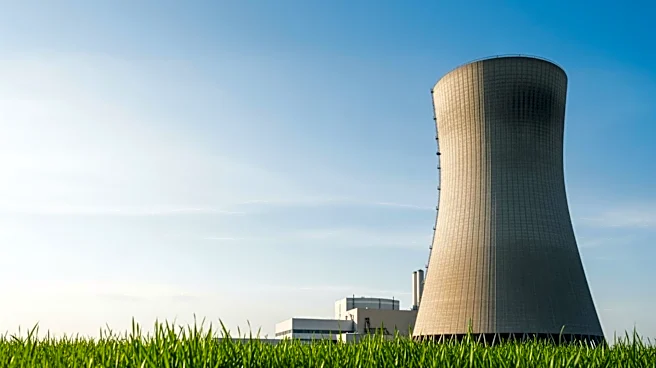
radiation protection, and non-proliferation. Nuclear energy is seen as vital for providing a stable, carbon-free electricity supply. In 2024, nuclear power accounted for 23.3% of the EU's electricity, with significant contributions from countries like France and Slovakia. The EU is also advancing nuclear safety measures, learning from past incidents like Fukushima, and promoting transparency and accountability. Additionally, the EU is investing in nuclear fusion research, aiming to develop a commercial fusion power plant.
Why It's Important?
Nuclear energy's role in the EU's energy strategy is crucial for reducing greenhouse gas emissions and enhancing energy security. As the EU transitions away from fossil fuels, nuclear power offers a reliable and low-carbon alternative. The focus on safety and waste management ensures that nuclear energy remains a sustainable option. The development of nuclear fusion technology could revolutionize energy production by providing a virtually limitless and clean energy source. The EU's commitment to nuclear energy reflects broader global efforts to combat climate change and secure energy supplies.
Beyond the Headlines
The EU's nuclear strategy highlights the balance between energy needs and environmental concerns. While nuclear energy offers significant benefits, challenges remain in managing radioactive waste and ensuring public safety. The pursuit of nuclear fusion represents a long-term vision for sustainable energy, but technological and financial hurdles must be overcome. The EU's approach could serve as a model for other regions seeking to balance energy security with environmental responsibility.