
What's Happening?
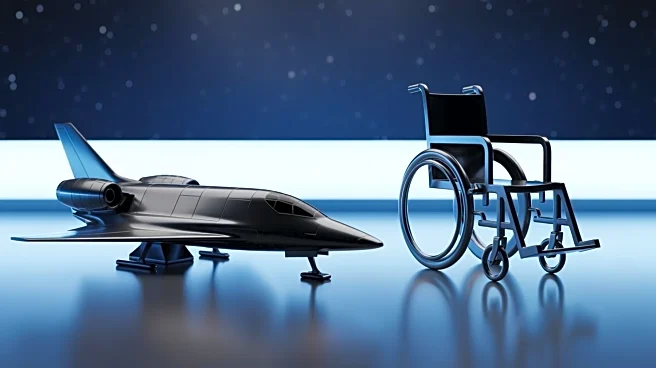
Michaela Benthaus, a paraplegic engineer from Germany, has become the first wheelchair user to travel to space. She was part of the Axiom-4 mission, which launched aboard Blue Origin's New Shepard rocket
from West Texas. The mission included five other passengers, including Hans Koenigsmann, a retired SpaceX executive. Benthaus, who was severely injured in a mountain biking accident seven years ago, experienced weightlessness during the 10-minute flight. The New Shepard capsule was designed with accessibility in mind, requiring only minor adjustments to accommodate Benthaus. This mission marks a significant milestone in making space travel more inclusive for individuals with disabilities.
Why It's Important?
The successful inclusion of a wheelchair user in a space mission represents a significant step forward in accessibility and inclusivity in space travel. This development could pave the way for more individuals with disabilities to participate in space exploration, challenging the traditional barriers that have limited access to space. It highlights the potential for technological advancements to create more inclusive environments, not only in space but also on Earth. The mission underscores the importance of designing technology and infrastructure that accommodate a diverse range of needs, potentially influencing future policies and practices in the aerospace industry.
What's Next?
Following this mission, there may be increased interest and investment in developing technologies that further enhance accessibility in space travel. Organizations like Blue Origin and other space companies might explore additional modifications to their spacecraft to accommodate a wider range of physical abilities. This could lead to more inclusive training programs and mission opportunities for individuals with disabilities. Additionally, the success of this mission may inspire other industries to prioritize accessibility in their technological advancements, potentially leading to broader societal changes in how inclusivity is approached.
Beyond the Headlines
The mission's success could have broader cultural implications, challenging societal perceptions of disability and capability. By demonstrating that individuals with disabilities can participate in space travel, it may inspire a reevaluation of what is possible for people with disabilities in other fields. This could lead to increased advocacy for accessibility and inclusivity across various sectors, encouraging a shift towards more equitable opportunities. The mission also highlights the role of private companies in advancing space exploration and inclusivity, potentially influencing public and private sector collaborations in future space endeavors.