
What's Happening?
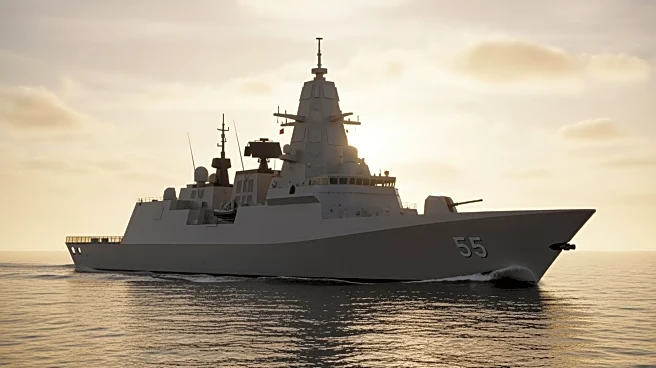
The Indonesian Navy has taken delivery of its second Brawijaya-class offshore patrol vessel, named KRI Prabu Siliwangi, from the Italian shipbuilder Fincantieri. The handover ceremony took place at the Muggiano
shipyard in La Spezia, Italy, on December 22. This vessel is part of a EUR1.18 billion (USD1.39 billion) contract signed in March 2024 for two ships initially intended for the Italian Navy. The Prabu Siliwangi, with a pennant number 321, follows its sister ship, KRI Brawijaya, which was commissioned in July and arrived at the Indonesian Navy's Tanjung Priok base in North Jakarta in September. The Brawijaya-class ships are 143 meters long, can accommodate 171 crew members, and are equipped with a combined diesel and gas turbine propulsion system, allowing speeds up to 32 knots. The vessels are armed with a 127 mm main gun, a 76 mm/62 Super Rapid Strales/Sovraponte gun, and two 25 mm cannons.
Why It's Important?
The acquisition of the Brawijaya-class vessels marks a significant enhancement of Indonesia's maritime defense capabilities. These ships are expected to bolster the Indonesian Navy's ability to patrol and secure its extensive maritime borders, which are crucial for national security and economic interests. The strategic location of Indonesia, with its vast archipelago and critical sea lanes, necessitates a robust naval presence to deter potential threats and ensure safe passage for international trade. The advanced capabilities of these vessels, including their speed and armament, provide the Indonesian Navy with a modern platform to address various maritime challenges, from piracy to territorial disputes. This development also reflects Indonesia's ongoing efforts to modernize its military forces and strengthen its defense partnerships with international allies.
What's Next?
The KRI Prabu Siliwangi is expected to undergo a formal induction ceremony in Indonesia in 2026. This event will likely be attended by high-ranking military officials and government representatives, underscoring the importance of this acquisition for Indonesia's defense strategy. The integration of these vessels into the Indonesian fleet will involve training for the crew and operational testing to ensure readiness for deployment. As Indonesia continues to enhance its naval capabilities, further collaborations with international defense contractors may be pursued to support its military modernization goals. The successful deployment of these vessels could also influence regional maritime security dynamics, prompting neighboring countries to assess their own naval capabilities.