

What's Happening?
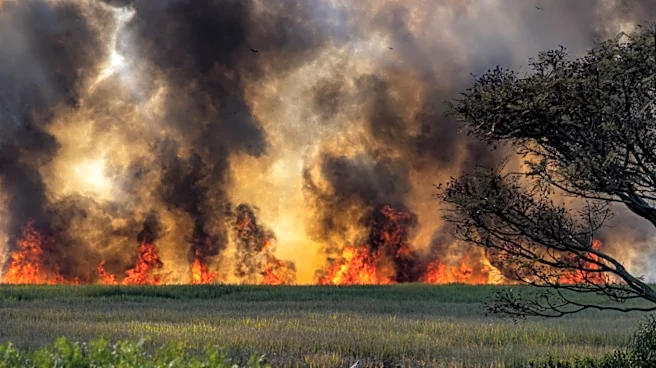
A recent analysis has found that the human-driven climate crisis has significantly increased the likelihood of wildfires in Canada, which have been causing toxic smoke to spread across the country and into the United States. The study, conducted by World
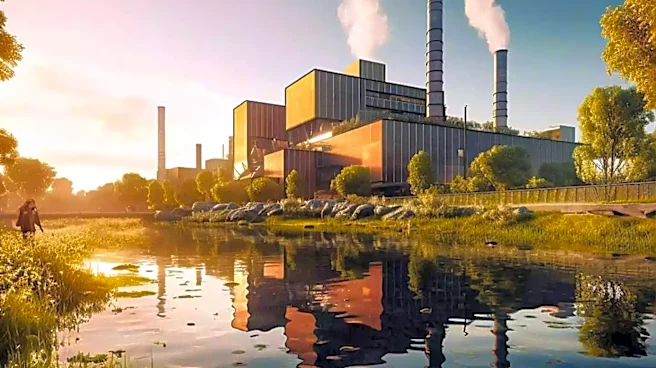
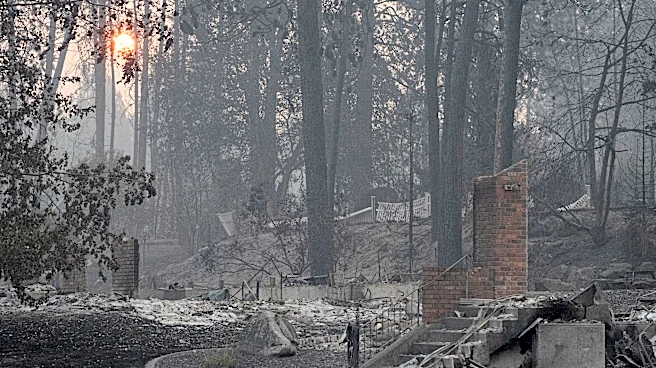
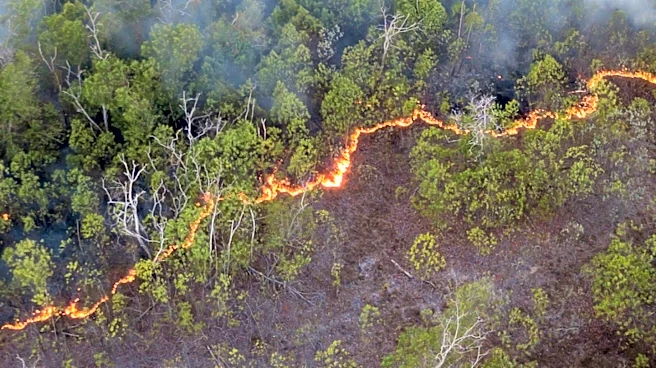
Weather Attribution, highlights that heightened global temperatures due to fossil fuel combustion have amplified fire-prone weather conditions in Ontario and the Northwest Territories. These regions have been severely affected by fires this summer, leading to evacuations and widespread smoke affecting multiple North American cities. The study indicates that such extreme fire conditions, which were once rare, are now expected to occur more frequently due to climate change.
Why It's Important?
The findings underscore the critical impact of climate change on natural disasters, with significant implications for public health and safety in both Canada and the United States. The increased frequency and intensity of wildfires pose a threat to air quality, leading to health risks for millions of people. The study also highlights the need for urgent action to reduce fossil fuel emissions to prevent further exacerbation of such extreme weather events. The situation has sparked political tensions, with President Trump criticizing Canada for not managing the fires effectively, despite scientific evidence pointing to global climate change as a key factor.
What's Next?
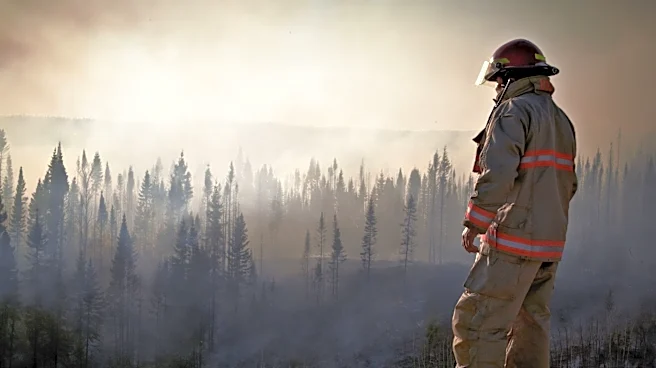
The ongoing wildfires in Canada continue to pose challenges, with thousands of people under evacuation orders in British Columbia due to 'explosive and extremely dangerous' fire conditions. The study calls for a rapid transition away from fossil fuels to mitigate the impact of climate change on wildfire frequency and intensity. Political leaders and environmental organizations may push for stronger climate policies and international cooperation to address the root causes of these environmental crises.
Beyond the Headlines
The study's findings highlight the broader ethical and environmental responsibilities of countries contributing to global emissions. The disproportionate impact of climate change on certain regions raises questions about environmental justice and the need for equitable solutions. The situation also emphasizes the importance of integrating scientific research into policy-making to address the complex challenges posed by climate change.