






What's Happening?
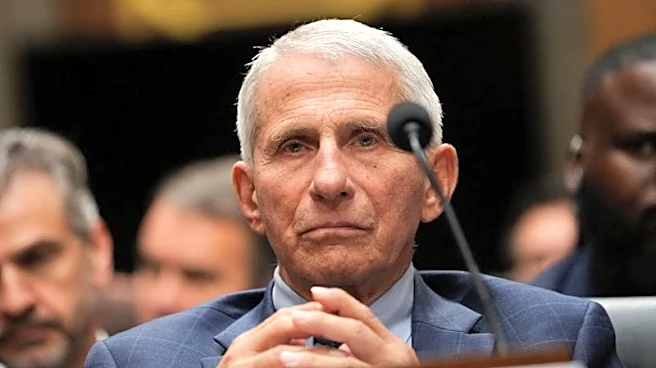
The Senate Homeland Security and Governmental Affairs Committee has held Anthony Fauci in contempt of Congress for invoking his Fifth Amendment rights during a hearing on the origins of the COVID-19 pandemic. The committee, chaired by a member who has previously
suggested Fauci should face imprisonment, is investigating the pandemic's origins, which are believed to have started in Wuhan, China. The Chinese government's initial suppression of information and obstruction of international investigations have been focal points of the inquiry. Fauci, a prominent figure in U.S. public health, has been criticized for not providing answers that only the Chinese government can supply.
Why It's Important?
This development highlights ongoing tensions and political maneuvering in the U.S. regarding accountability for the COVID-19 pandemic. The focus on Fauci, despite the lack of access to critical information from China, underscores the politicization of the pandemic's origins. The outcome of this inquiry could influence public trust in health officials and impact future pandemic preparedness strategies. It also reflects broader geopolitical tensions between the U.S. and China, with potential implications for international relations and global health policy.
What's Next?
The committee's actions may lead to further political and legal proceedings against Fauci, potentially affecting his role and influence in public health. The inquiry may also prompt renewed calls for international cooperation and transparency in pandemic investigations. As the U.S. seeks to prevent future pandemics, there may be increased pressure on China to provide more information about the early days of the COVID-19 outbreak. The situation could also lead to legislative efforts aimed at strengthening U.S. pandemic response capabilities.
Beyond the Headlines
The focus on Fauci rather than the Chinese government's role in the pandemic's origins raises questions about the use of political scapegoating in public health crises. This situation may have long-term effects on the credibility of scientific advisors and the politicization of health issues. It also highlights the challenges of balancing national security concerns with scientific inquiry in a globalized world.