



What's Happening?
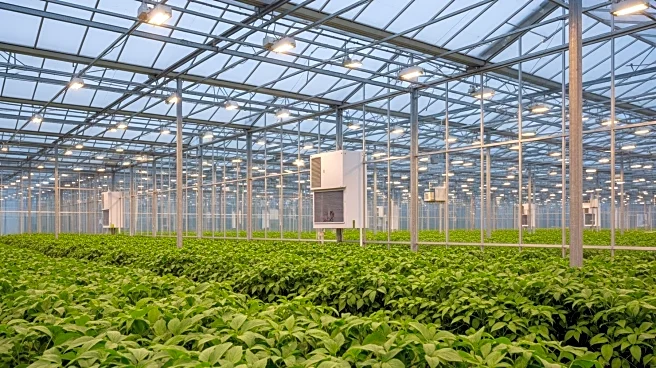
Turkey is emerging as a significant player in the indoor farming market, with a strong focus on greenhouse cultivation. The country's indoor farming market is valued at USD 1.73 billion in 2025, with greenhouses accounting for USD 1.59 billion of this
market. Turkey is a leading exporter of fruits and vegetables, supplying nearly 9% of EU imports. The country's success in this sector is attributed to its well-established greenhouse infrastructure and favorable agro-climatic conditions. However, the adoption of high-tech farming methods is primarily concentrated in large, export-oriented farms, while smaller producers continue to use cost-effective, lower-tech systems.
Why It's Important?
Turkey's role as a leader in indoor farming has significant implications for the global agricultural market. The country's ability to supply a substantial portion of the EU's fruit and vegetable imports highlights its importance in the international supply chain. The growth of high-tech farming methods, although currently limited to larger farms, indicates a potential shift towards more efficient and sustainable agricultural practices. This could lead to increased productivity and reduced environmental impact, benefiting both producers and consumers. However, challenges such as high energy costs and fragmented land ownership may hinder the rapid expansion of high-tech systems.
What's Next?
The future of Turkey's indoor farming sector is likely to involve gradual modernization rather than a rapid transformation. As more operators integrate automation and climate control technologies, the sector is expected to become more efficient and competitive. Export-focused farms may invest in higher-spec structures to meet quality and consistency requirements, while vertical farming and hydroponic projects could expand around urban centers and premium retail channels. These developments could enhance Turkey's position as a key market in the region's indoor farming landscape.