





What's Happening?
On World Tsunami Awareness Day, the National Oceanography Centre (NOC) emphasized the critical importance of understanding and preparing for tsunami hazards. NOC scientists are conducting vital research to improve knowledge of how tsunamis are generated,
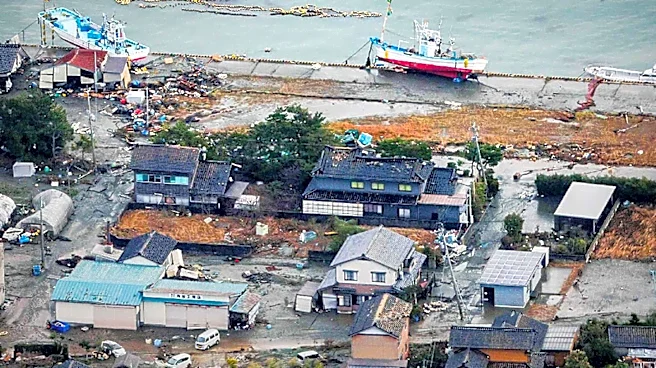
focusing on better forecasting and preparedness to reduce their impacts. This work includes collaborations with partners like Tonga Geological Services, informing risk assessments for communities exposed to tsunami hazards. The 2022 Hunga volcanic eruption, the most explosive volcanic event this century, served as a unique natural laboratory, generating tsunamis that caused widespread damage and took lives across the Pacific Ocean, with local runup heights exceeding 25 meters. NOC researchers are investigating various tsunami generation mechanisms, including submarine volcanic explosions, caldera collapses, and powerful flows of hot volcanic material entering the ocean.
Why It's Important?
The research and awareness efforts highlighted by the National Oceanography Centre are crucial for global coastal communities, including those in the U.S., which are vulnerable to tsunami events. The 2022 Hunga eruption demonstrated the far-reaching and devastating potential of tsunamis, even from volcanic origins, which are often less monitored and understood than earthquake-generated tsunamis. For the U.S., particularly its Pacific and Atlantic coastlines, this research is vital for enhancing early warning systems, improving hazard assessments, and developing more effective preparedness and resilience strategies. Understanding the complex chain of events that trigger tsunamis can help protect lives, critical infrastructure, and economic assets in coastal regions, mitigating the severe socio-economic impacts of such disasters.
What's Next?
The National Oceanography Centre and its partners will continue their research into tsunami generation and propagation, utilizing advanced seafloor mapping, geophysical monitoring, and land-based surveys. This ongoing work aims to uncover more about the processes that create these hazards and their interactions. Future efforts will likely focus on improving monitoring capabilities for less understood tsunami sources, such as underwater volcanic eruptions, and translating scientific findings into actionable risk mitigation strategies for vulnerable communities. International cooperation, including the participation of the U.S., in initiatives like the Intergovernmental Oceanographic Commission (IOC) of UNESCO Tsunami Programme, will be essential for developing robust global tsunami warning and mitigation systems.
Beyond the Headlines
The focus on tsunami preparedness extends beyond immediate safety measures to encompass long-term resilience and sustainable development in coastal regions. The research into past events, such as the Storegga Slide off Norway 8,200 years ago, underscores the geological history of tsunami hazards and the need for continuous vigilance, even in areas not typically considered high-risk. This broader perspective highlights the ethical responsibility of nations to invest in scientific understanding and preparedness, ensuring that all communities, regardless of their perceived risk level, are equipped to face potential natural disasters. The integration of scientific research with community engagement and policy development is key to fostering a culture of preparedness and minimizing the human and economic toll of future tsunamis.