
What's Happening?
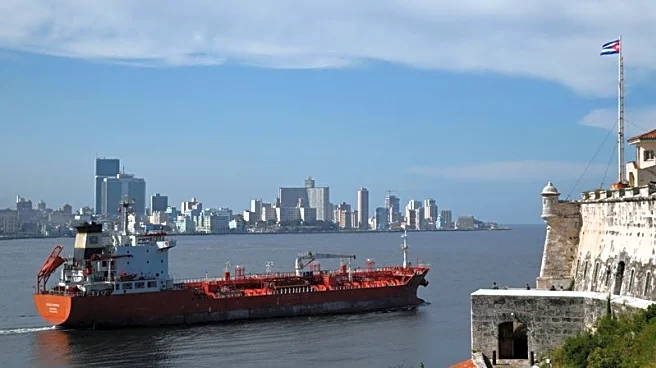
President Donald Trump has announced a potential imposition of tariffs on countries exporting oil to Cuba, a move that places Mexico in a challenging position. As a significant supplier of oil to Cuba, Mexico could
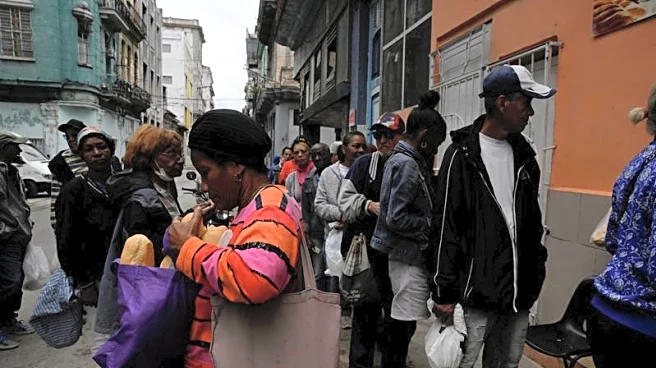
face economic repercussions if it continues its oil shipments to the island nation. Mexican President Claudia Sheinbaum expressed concerns that these tariffs could lead to a humanitarian crisis in Cuba, affecting essential services such as hospitals and food supply. Despite these concerns, Sheinbaum has not committed to halting oil exports but has instead called for diplomatic discussions with the U.S. to clarify the scope of the tariffs. The Trump administration's decision is part of a broader strategy to pressure the Cuban government, which it accuses of aligning with hostile nations and supporting terrorist groups.
Why It's Important?
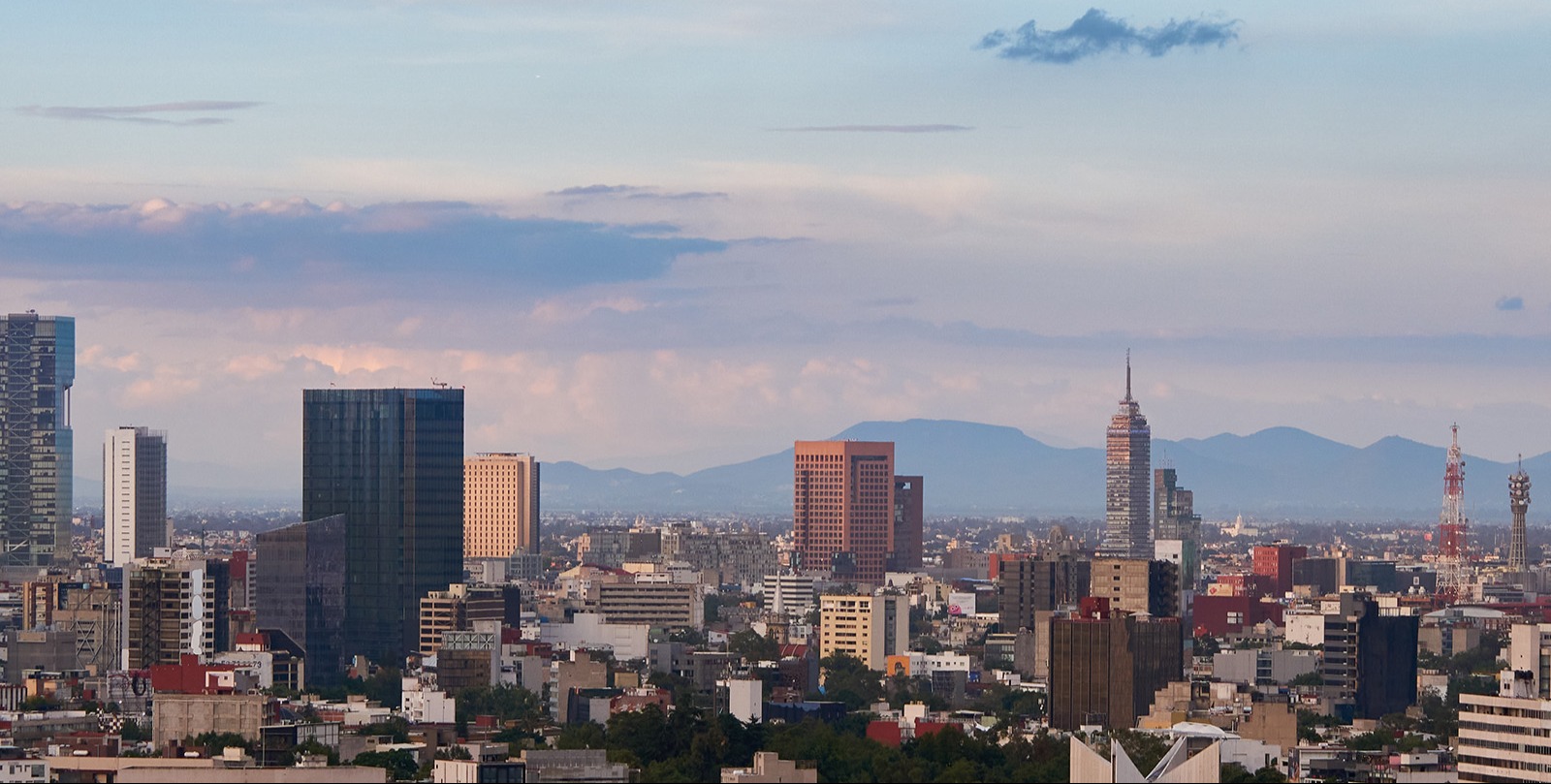
The potential tariffs could have significant implications for U.S.-Mexico relations and the broader geopolitical landscape in the Americas. For Mexico, the tariffs threaten to disrupt its economic ties with both the U.S. and Cuba, potentially leading to economic losses and diplomatic tensions. The situation also highlights the ongoing U.S. efforts to isolate Cuba economically and politically, a strategy that could exacerbate the already dire living conditions on the island. The move could further strain U.S. relations with other Latin American countries, such as Venezuela, which has historically supported Cuba with oil supplies. The tariffs could also impact global oil markets, as countries reassess their trade relationships in response to U.S. policies.
What's Next?
Mexico is likely to engage in diplomatic negotiations with the U.S. to seek a resolution that avoids the imposition of tariffs. The outcome of these discussions could influence Mexico's future trade policies and its relationship with Cuba. Additionally, the Cuban government may seek alternative sources of oil or increase its diplomatic efforts to counteract the U.S. measures. The international community, particularly countries with vested interests in Cuba, may also respond to the U.S. actions, potentially leading to broader geopolitical shifts in the region.
Beyond the Headlines
The situation underscores the complex interplay between economic policy and international relations. The U.S. tariffs are not just an economic measure but also a tool of foreign policy aimed at regime change in Cuba. This approach raises ethical questions about the use of economic sanctions as a means of political coercion and the humanitarian impact on the Cuban population. The potential for increased hardship in Cuba could lead to greater migration pressures on neighboring countries, including the U.S., further complicating regional dynamics.