


What's Happening?
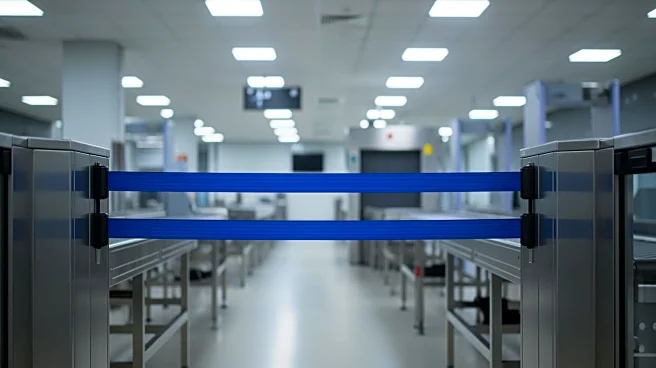
The U.S. Department of Homeland Security (DHS) has temporarily suspended the TSA PreCheck and Global Entry programs due to a partial government shutdown. This decision follows the failure of Congress to reach an agreement on immigration enforcement reforms,
leading to a lack of funding for the DHS. The suspension, which began at 6 a.m. ET, was announced with little notice, causing potential inconvenience for travelers who rely on these programs for expedited security and customs processes. The TSA PreCheck program, which had over 20 million active members in 2024, allows approved passengers to use faster security lanes at U.S. airports. Global Entry expedites customs and immigration clearance for pre-approved, low-risk international travelers. The suspension is part of emergency measures by the DHS to redirect staffing and resources amid the shutdown.
Why It's Important?
The suspension of TSA PreCheck and Global Entry programs is significant as it affects millions of travelers who depend on these services for efficient airport and customs experiences. The travel industry, already sensitive to disruptions, could face economic impacts similar to a previous shutdown that resulted in $6.1 billion in losses. Airlines and travelers are concerned about the potential for increased wait times and logistical challenges at airports. The situation underscores the broader implications of political stalemates on public services and the economy, highlighting the need for timely legislative action to prevent such disruptions.
What's Next?
The DHS is expected to continue prioritizing general traveler processing at airports and ports of entry while the shutdown persists. The situation may prompt further discussions in Congress to resolve the funding impasse and restore normal operations. Stakeholders, including airlines and travel industry groups, are likely to advocate for a swift resolution to minimize disruptions. The outcome of these negotiations will determine the duration of the program suspensions and the potential for future shutdowns affecting critical services.