








What's Happening?
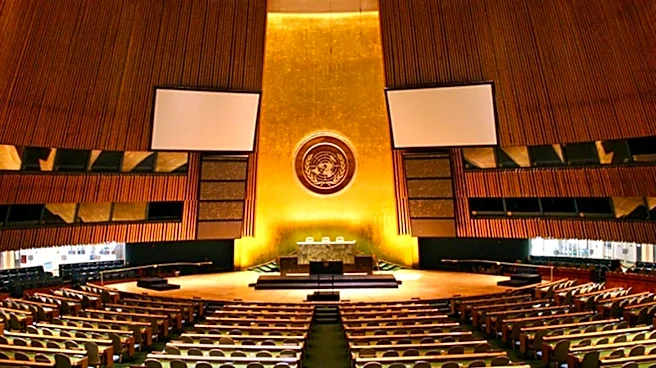
Several member states of the UN Security Council, including Colombia, Denmark, France, Greece, Latvia, Liberia, Panama, and the United Kingdom, have pledged to prioritize the implications of climate change for international peace and security during their
respective terms. This commitment aims to foster a systematic, responsive, pragmatic, comprehensive, and evidence-based approach to climate, peace, and security. The initiative involves convening at least one Security Council meeting on climate-related topics, enhancing cross-Presidency planning for coherence, and requesting the inclusion of climate change and conflict analysis in UN briefings to the Council. They also plan to invite experts from affected countries to share experiences on the ground regarding climate change impacts. The pledges were initially launched in 2023 by Malta, Mozambique, Switzerland, and the United Arab Emirates, and have since been further developed with additional member states.
Why It's Important?
This collective pledge by UN Security Council members signifies a growing recognition of climate change as a direct threat to international peace and security, moving beyond its traditional environmental classification. By integrating climate change analysis into security discussions, the Council aims to proactively address potential drivers of conflict and challenges to peace consolidation. This shift could lead to more comprehensive risk assessments and management strategies, potentially influencing how the UN approaches peacekeeping operations and special political missions. The emphasis on evidence-based dialogue and common understanding among Council members is crucial for developing effective global responses. Furthermore, highlighting the disproportionate impact of climate change on women, youth, and vulnerable populations underscores a commitment to human security and inclusive solutions, potentially shaping future humanitarian and development aid policies.
What's Next?
The pledging states will work to implement their commitments by convening Security Council meetings focused on climate, peace, and security. They will also strive to integrate language on these issues into Security Council products and publicly highlight the linkages between climate and security. The initiative encourages the UN to support its missions in minimizing their carbon footprint and increasing environmental management actions. The group will continue to foster evidence-based dialogue and promote common understanding among Council members. They also welcome new pledgers and plan to review the document as needed to adapt their approach to the evolving nature of climate change's impact on international peace and security. This ongoing effort suggests a sustained focus on this issue within the UN's security agenda.
Beyond the Headlines
The integration of climate change into the UN Security Council's mandate reflects a significant evolution in the understanding of global security. Traditionally, security concerns have been framed around interstate conflicts and terrorism. However, this initiative acknowledges that environmental factors can act as threat multipliers, exacerbating existing vulnerabilities and potentially leading to resource scarcity, displacement, and social unrest. This broader perspective challenges the conventional boundaries of security policy and highlights the interconnectedness of environmental stability and geopolitical stability. The emphasis on supporting UN Missions to minimize their carbon footprint also raises ethical considerations about the environmental responsibility of international interventions. This development could pave the way for a more holistic and preventative approach to global security, where climate resilience is seen as integral to peacebuilding and conflict prevention.