

What's Happening?
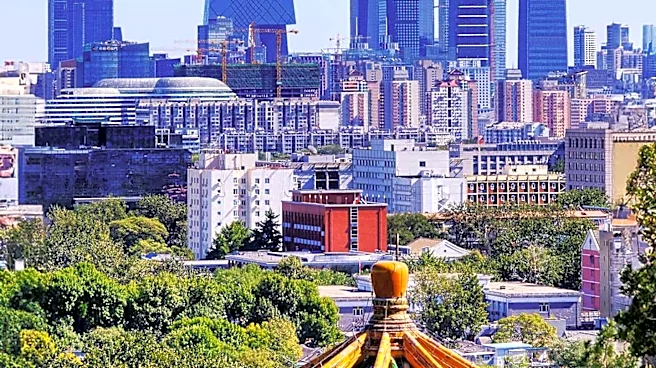
Beijing, one of the world's oldest capitals, has served as the seat of Chinese emperors for over six centuries. The city is home to the Forbidden City, the largest palace complex globally, and is located near the Great Wall of China. The Forbidden City, constructed
between 1406 and 1420, housed twenty-four emperors of the Ming and Qing dynasties and was the center of the Chinese world for 500 years. It is now the Palace Museum, attracting millions of visitors annually. South of the Forbidden City is the Temple of Heaven, built in 1420, where emperors prayed for good harvests. The Great Wall, primarily built during the Ming dynasty, protected China from northern invaders. Additionally, Beijing features traditional hutongs, narrow lanes of brick houses that represent the city's historical everyday life.
Why It's Important?
The historical and cultural significance of Beijing offers a profound insight into China's imperial past and its enduring legacy. The Forbidden City and the Temple of Heaven showcase architectural marvels and the intricate social and political structures of ancient China. The Great Wall stands as a testament to monumental human endeavor and strategic defense. These landmarks are not merely tourist attractions but serve as vital educational resources, preserving centuries of history, art, and governance. For global understanding, these sites provide context to China's cultural identity and its historical contributions, influencing contemporary international relations and cultural exchange. The preservation of such sites is crucial for maintaining a collective human heritage.
What's Next?
While the provided information does not detail specific upcoming events or plans for Beijing, the ongoing preservation and accessibility of its historical sites are expected to continue. Efforts will likely focus on maintaining the structural integrity of ancient buildings, managing tourist flows, and enhancing the visitor experience through educational programs and digital resources. International collaborations in heritage conservation may also play a role in ensuring these sites remain protected for future generations. The city's continuous development will need to balance modernization with the safeguarding of its rich historical fabric, particularly in areas like the hutongs, which face pressures from urban expansion.
Beyond the Headlines
The historical narrative embedded in Beijing's landmarks extends beyond mere tourism, offering deeper insights into governance, societal organization, and cultural values that have shaped China. The Forbidden City's design, for instance, reflects a hierarchical worldview with the emperor at its center, influencing Chinese political thought for centuries. The Temple of Heaven highlights the spiritual and agricultural foundations of imperial power. The Great Wall symbolizes both defense and isolation, themes that have recurred in China's foreign policy. Understanding these historical underpinnings is crucial for comprehending contemporary Chinese identity and its approach to global affairs, providing a lens through which to interpret its cultural and political evolution.