







What's Happening?
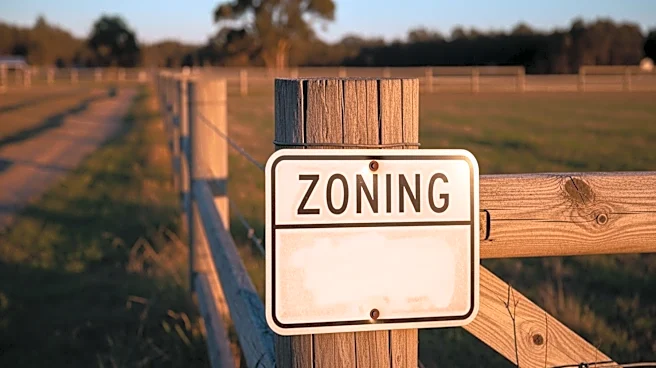
The Vanderburgh County Commission has passed an ordinance that simplifies the establishment of privately owned septic receiving stations in the county. The ordinance allows these stations to be built in M-1, M-2, and M-3 zoning districts, expanding from
the previous restriction to M-3 zones only. This change comes in response to the planned closure of the Evansville Water and Sewer Utility's septic receiving station, which is set to close on July 1. The ordinance aims to provide more flexibility for haulers looking to build new stations, potentially affecting local residents' septic waste disposal costs. However, concerns have been raised about the proximity of these stations to homes and businesses, as well as the lack of transparency in the process, since businesses won't need to file for rezoning to establish a station.
Why It's Important?
The ordinance is significant as it addresses the impending closure of a major septic receiving station, which could have led to increased costs for local residents if waste had to be hauled out of town. By allowing stations in more zoning areas, the county aims to mitigate these potential costs. However, the decision has sparked concerns among residents about the environmental and social impacts, such as odors and increased truck traffic. The lack of required rezoning applications means residents may not be informed about new stations being built near them, potentially leading to community opposition and legal challenges.
What's Next?
As the closure date of the Evansville Water and Sewer Utility's septic station approaches, local haulers and businesses will likely begin planning and constructing new septic receiving stations in the newly permitted zones. Residents may continue to voice their concerns, potentially leading to public meetings or petitions to address transparency and environmental impact issues. The county may need to consider additional measures to ensure community awareness and involvement in the process.
Beyond the Headlines
The ordinance reflects broader trends in waste management and zoning flexibility, highlighting the balance between industrial needs and residential concerns. It raises questions about the role of local government in managing waste disposal and the importance of community engagement in zoning decisions. The situation may prompt discussions on sustainable waste management practices and the need for comprehensive planning to address environmental and social impacts.