








What's Happening?
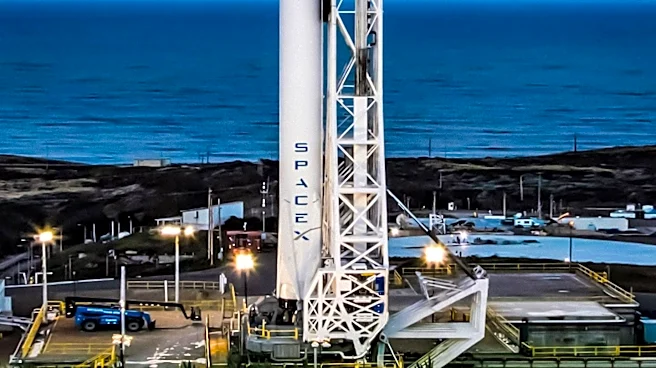
On August 5, a discarded upper stage of a SpaceX Falcon 9 rocket is set to impact the Moon near Einstein Crater. This event is notable as it marks the most precisely predicted unplanned lunar impact. The upper stage, catalogued as 2025-010D, was initially
launched in January 2025 to deliver two private lunar landers. However, it remained in a highly elongated orbit due to the trans-lunar injection, eventually leading to an inevitable collision with the Moon. A coordinated effort by astronomers worldwide is underway to observe the impact, which is expected to provide valuable data on lunar surface interactions.
Why It's Important?
This event presents a unique opportunity for scientists to study the effects of a human-made object impacting the Moon. The data collected could enhance understanding of lunar surface dynamics and contribute to future lunar exploration missions. Additionally, the impact highlights the growing issue of space debris in cislunar space, emphasizing the need for better debris management practices as commercial and governmental lunar missions increase. The observations from this impact could inform future policies and strategies for managing space debris, ensuring the safety and sustainability of space exploration activities.
What's Next?
In the days leading up to the impact, additional tracking will refine the predicted impact location and time. Observatories and amateur astronomers are encouraged to participate in the observation campaign, which aims to capture the impact flash and ejecta plume. The data collected will be analyzed to improve models of lunar impacts and inform future missions. The event also underscores the need for international cooperation in developing regulations for space debris management, particularly as lunar exploration activities continue to expand.