






What's Happening?
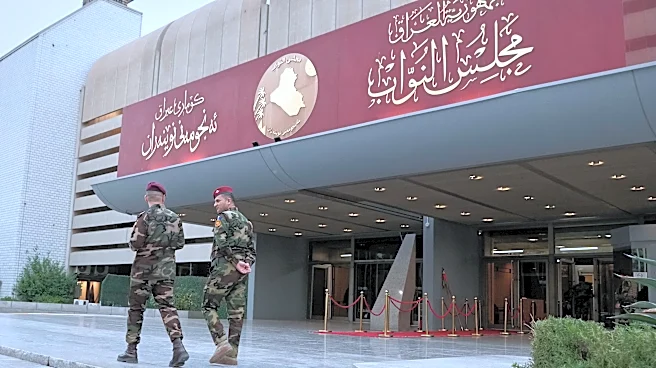
Iraq's parliament has elected Nizar Amidi, a Kurdish politician, as the country's new president. This election follows a parliamentary vote that failed to produce a decisive majority. Amidi's election comes at a time when Iraq is dealing with the repercussions
of the U.S.-Israeli conflict with Iran, which has led to attacks on U.S. bases and critical infrastructure in Iraq. The conflict has also disrupted Iraq's oil exports, a vital component of its economy. Amidi, a member of the Patriotic Union of Kurdistan, was elected after a second round of voting, defeating other candidates including Iraq's current foreign minister.
Why It's Important?
The election of Nizar Amidi as president is significant for Iraq's political landscape, as it attempts to stabilize amid regional conflicts. The presidency, traditionally held by a Kurdish politician, plays a crucial role in balancing Iraq's diverse ethnic and sectarian groups. Amidi's leadership will be pivotal in navigating Iraq's internal and external challenges, particularly in maintaining relations with the U.S. and Iran. The election also highlights the ongoing influence of Kurdish parties in Iraq's political system and the importance of addressing the country's economic dependencies and security concerns.
What's Next?
Amidi's presidency will involve forming a new government and addressing the challenges posed by the U.S.-Iran conflict. The new administration will need to focus on rebuilding Iraq's economy and infrastructure, which have been affected by the conflict. Additionally, Amidi will have to manage Iraq's complex political alliances and ensure stability in a region marked by ongoing tensions. The international community will be watching closely to see how Iraq navigates its relationships with neighboring countries and global powers.