



What's Happening?
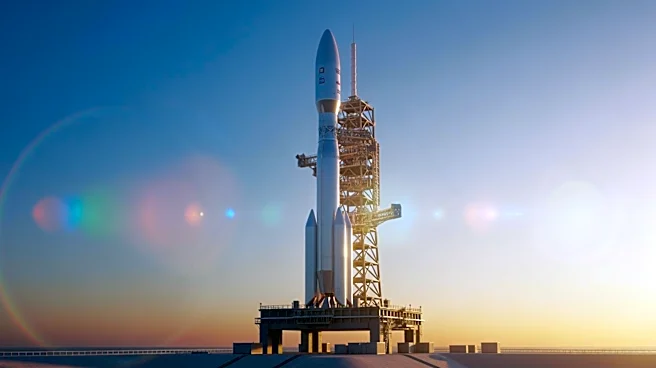
NASA's Artemis II mission is on track for its scheduled launch on April 1, 2026, with an 80% chance of favorable weather conditions. The mission will be the first crewed mission to the Moon since 1972, carrying four astronauts on a journey around the Moon and
back. The launch will utilize the Space Launch System (SLS) rocket and the Orion spacecraft. NASA has been monitoring weather conditions closely, with concerns about solar flares and ground winds, but current forecasts indicate that these will not impact the launch. The mission is a key step in NASA's Artemis program, which aims to establish a sustainable human presence on the Moon.
Why It's Important?
The Artemis II mission is a significant milestone in space exploration, marking the return of humans to lunar exploration after more than five decades. It serves as a test for the technologies and systems that will be used in future missions to establish a lunar base and explore Mars. The mission also highlights the importance of international collaboration in space exploration, with Canadian astronaut Jeremy Hansen participating. The success of Artemis II could pave the way for significant advancements in space technology and exploration, potentially leading to new scientific discoveries and economic opportunities.
What's Next?
Following the Artemis II mission, NASA plans to continue with the Artemis III mission, which aims to land astronauts on the lunar surface. The data and experience gained from Artemis II will be crucial in planning and executing future missions, including the development of the Lunar Gateway and lunar habitats. These efforts are part of a broader strategy to establish a sustainable human presence on the Moon, which will serve as a foundation for future missions to Mars. The success of Artemis II will also likely influence international partnerships and funding for future space exploration initiatives.