

What's Happening?
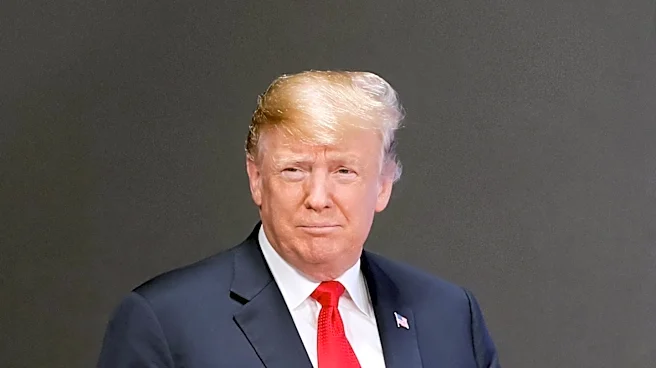
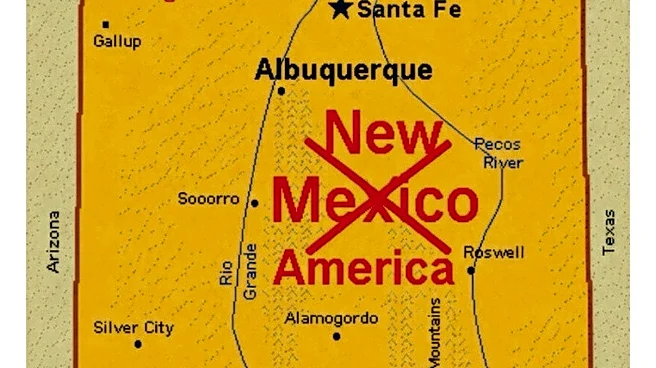
President Trump recently suggested renaming the state of New Mexico to 'New America' through posts on social media platforms, including Truth Social and X. These posts featured images of New Mexico with its name altered to 'New America.' This suggestion
follows previous actions by President Trump to rename geographical features via executive order, such as the Gulf of Mexico to 'Gulf of America' and Lake Ontario to 'Lake America.' However, the U.S. federal government lacks the constitutional authority to unilaterally change a state's name; such a change would require an amendment to the state constitution approved by New Mexico voters. New Mexico's Governor Michelle Lujan Grisham, along with U.S. Senators Martin Heinrich and Ben Ray Luján, and U.S. Representatives Melanie Stansbury and Gabe Vasquez, have strongly rejected the proposal. Governor Grisham emphasized that New Mexico's name is not 'up for debate' and has existed since before the United States. Senator Heinrich stated he would always refer to the Gulf of Mexico, Lake Ontario, and New Mexico by their actual names. Even Republican nominee Greg Hull, running for governor, denounced the idea, citing the state's deep historical and cultural identity.
Why It's Important?
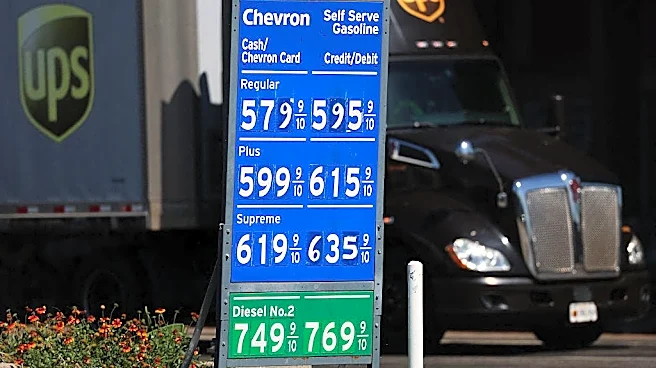
This issue highlights the constitutional limits of presidential power regarding state sovereignty and nomenclature. While a president can rename federal geographic landmarks, the renaming of a state falls outside executive authority, underscoring the division of powers within the U.S. federal system. The strong bipartisan rejection from New Mexico's political figures, including Democrats and a Republican gubernatorial candidate, demonstrates a unified defense of the state's historical and cultural identity. The state's name, 'New Mexico,' dates back to the 16th century, predating the founding of the United States, and is deeply intertwined with its Native American and Spanish heritage. The controversy also draws attention to the use of social media by political leaders to float significant, albeit unconstitutional, proposals, and the immediate public and political reactions these can provoke. Critics suggest President Trump's renaming efforts are a distraction from other pressing national issues, such as the war in Iran and rising gas prices.
What's Next?
Given the constitutional limitations, it is highly unlikely that New Mexico will be officially renamed 'New America.' Any such change would necessitate a state constitutional amendment, requiring approval from New Mexico voters, which appears improbable given the widespread opposition from state leadership across the political spectrum. The immediate future will likely see continued reaffirmation from New Mexico officials regarding their state's name and identity. The incident may also fuel further debate on the appropriate use of presidential social media and the boundaries of executive power. Political commentators and the public will likely continue to scrutinize President Trump's motivations for such proposals, particularly in the context of his approval ratings and ongoing national and international challenges. The unified stance of New Mexico's political figures suggests a sustained resistance to any attempts to alter the state's established identity.
Beyond the Headlines
The discussion surrounding the potential renaming of New Mexico delves into deeper implications concerning cultural identity, historical preservation, and the symbolic power of names. The state's name, 'New Mexico,' is not merely a label but a reflection of centuries of history, including its indigenous roots and Spanish colonial past. Attempts to change it touch upon sensitive issues of heritage and self-determination. This event also underscores the broader trend of political discourse playing out on social media, where proposals, regardless of their feasibility, can quickly gain traction and elicit strong reactions. It raises questions about the role of national leaders in respecting regional identities and the potential for such proposals to be perceived as dismissive or disrespectful of local history and culture. The incident serves as a reminder of the enduring significance of names in shaping collective identity and the complexities involved when these are challenged at a national level.