


What's Happening?
Republican Congresswoman Anna Paulina Luna, representing Florida's 13th district, has publicly stated that open dialogue with Russia is crucial for achieving peace. Her remarks follow a reported phone conversation between Russian President Vladimir Putin
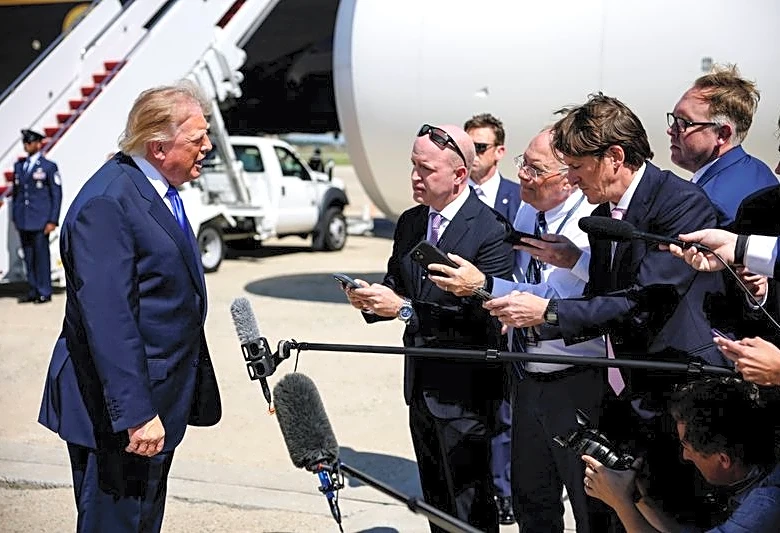
and President Trump on September 8, 2026, where they allegedly discussed ending the Ukraine war and restoring U.S.-Russia relations. Luna, who has been in office since 2021 and is a strong supporter of President Trump, emphasized the importance of such discussions. She is currently engaged in a competitive re-election campaign against Democratic nominee retired Army Brig. Gen. Leela Gray. Political analysts consider the race for Florida's 13th congressional district to be an interesting contest, despite Republicans generally being favored.
Why It's Important?
Congresswoman Luna's advocacy for open dialogue with Russia carries significant implications for U.S. foreign policy and international relations, particularly concerning the ongoing conflict in Ukraine. Her stance aligns with a potential shift towards diplomatic engagement with Russia, which could lead to a re-evaluation of current U.S. strategies and alliances. This perspective is particularly noteworthy given her strong support for President Trump, whose administration also pursued direct engagement with Russia. The outcome of her re-election bid could influence the political landscape regarding foreign policy discussions within the Republican party and potentially impact future legislative efforts related to international diplomacy. Furthermore, the emphasis on restoring U.S.-Russia relations could have broader geopolitical consequences, affecting global stability and the balance of power.
What's Next?
The immediate focus will be on the ongoing congressional race in Florida's 13th district, where Congresswoman Luna faces a challenge from retired Army Brig. Gen. Leela Gray. The outcome of this election will determine whether Luna continues to serve in Congress and advocate for her foreign policy views. Should she be re-elected, her voice on U.S.-Russia relations and the Ukraine conflict will likely remain prominent. Additionally, the reported phone call between President Putin and President Trump suggests a potential for future high-level diplomatic engagements, which could further shape the discourse around peace negotiations and the restoration of bilateral ties. The results of recent U.S. special envoy visits to Moscow and Kyiv, also mentioned in the context of the phone call, will be closely watched for any indications of progress or future diplomatic initiatives.
Beyond the Headlines
Congresswoman Luna's statements highlight a recurring debate within U.S. foreign policy regarding the efficacy and ethics of engaging with adversarial nations. Her emphasis on open dialogue, even with countries involved in conflicts, raises questions about the balance between diplomatic engagement and punitive measures. This approach could signal a broader ideological current within a segment of the Republican party that prioritizes direct communication over isolation, potentially leading to a re-evaluation of long-standing foreign policy doctrines. The discussion around restoring U.S.-Russia relations, particularly in the context of the Ukraine war, touches upon complex ethical considerations regarding international sovereignty, human rights, and the role of global powers in conflict resolution. The long-term implications could involve a shift in how the U.S. approaches international crises and its relationships with major global actors.