



What's Happening?
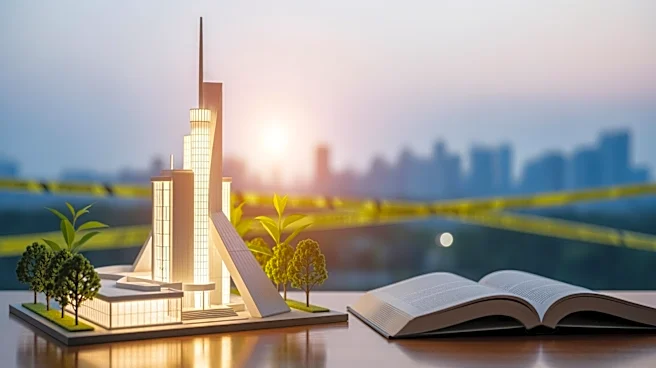
The Obama Presidential Center is set to open on Chicago's South Side, aiming to serve as a catalyst for change in the area. The center, located in Jackson Park, includes event spaces, parks, indoor basketball courts, and a public library. The centerpiece
is a 225-foot granite tower housing a museum. The center's development has been in progress for nearly five years, with its roots tracing back to Barack Obama's early days as a community organizer in Chicago. The center aspires to bring hope and change to the South Side, reflecting the ideals of Obama's presidential campaign.
Why It's Important?
The opening of the Obama Presidential Center is significant for Chicago's South Side, a region that has historically faced economic challenges and slow development. The center is expected to attract visitors and stimulate local businesses, potentially leading to increased property values and economic growth. However, there are concerns about gentrification and the displacement of long-time residents. The center's success in fostering community engagement and economic development will be crucial in addressing these issues and fulfilling its promise of hope and change.
What's Next?
As the center opens, it will be important to monitor its impact on the local community and economy. Stakeholders, including local businesses and residents, will be watching to see if the center can deliver on its promises of revitalization without causing harm to existing communities. The center's ability to attract visitors and integrate them into the local economy will be key to its long-term success. Additionally, ongoing community engagement and dialogue will be necessary to address concerns and ensure that the center benefits all residents.
Beyond the Headlines
The Obama Presidential Center represents a broader effort to address systemic issues in urban areas through cultural and educational initiatives. Its focus on community engagement and historical education may inspire similar projects in other cities facing similar challenges. The center's success could serve as a model for how presidential libraries and cultural institutions can play a role in urban revitalization and community building.