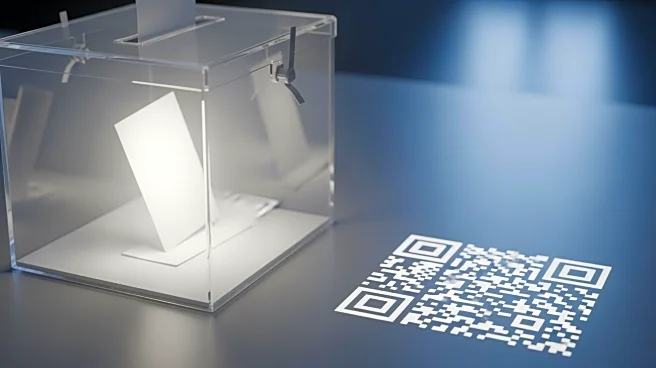




What's Happening?
The Georgia Senate recently voted against a bill that proposed switching the state's voting method to hand-marked paper ballots before the upcoming November elections. The bill, which was defeated by a 27-21 vote, fell short of the majority needed for passage.
This decision leaves Georgia lawmakers in a difficult position as they must now find a way to comply with a state law requiring the removal of QR codes from ballots, a mandate established two years ago. The current voting system in Georgia involves touchscreens that print paper ballots, which are then scanned by machines reading QR codes. Critics argue that these QR codes prevent voters from verifying that their ballots accurately reflect their choices. The bill's failure has sparked a debate among lawmakers, with some expressing concerns about the potential chaos of implementing such a change so close to the elections.
Why It's Important?
The rejection of the bill has significant implications for Georgia's electoral process and voter confidence. The continued use of QR codes on ballots raises concerns about election security and transparency, as voters cannot directly verify their selections. This issue is particularly pressing given the upcoming midterm elections, where voter trust and election integrity are paramount. The decision also highlights the challenges of balancing technological advancements in voting with the need for transparency and security. Lawmakers are now under pressure to find alternative solutions to comply with the state law, which could involve amending other election-related legislation. The outcome of this situation could influence future discussions on voting technology and election security across the United States.
What's Next?
With the bill's defeat, Georgia lawmakers may attempt to revive the measure by amending other election-related bills. One potential candidate is Senate Bill 214, which has already advanced and could be modified to include provisions for hand-marked ballots. Additionally, the state must address the QR code issue before the law prohibiting their use takes effect on July 1. As the primary election in May will still utilize the current touchscreen technology, lawmakers face a tight timeline to implement any changes. The ongoing debate and legislative efforts will likely continue to draw attention from election security advocates and skeptics alike, as they seek to ensure a transparent and secure voting process.