



What's Happening?
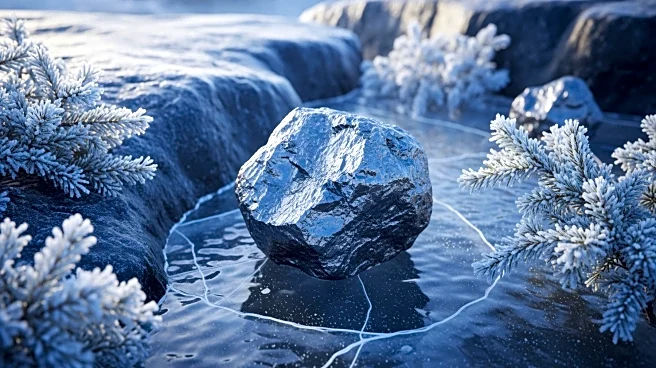
The Arctic region is becoming a focal point for global powers seeking to extract critical minerals necessary for various industries. Countries such as Russia, Canada, the United States, Denmark, and Norway are asserting their interests in the Arctic,
driven by the need to counter China's dominance in the critical minerals market. Russia is advancing its Arctic 2035 plan, which includes infrastructure development and strategic importance for national security. Canada is also increasing its investment in the Arctic to enhance its mineral mining capacity, partly in response to strained relations with the United States. The United States, under President Trump, has shown interest in Greenland's resources, with discussions about purchasing a stake in a major rare earths project. However, environmentalists express concerns about the potential impact of mining activities on the Arctic's fragile ecosystem.
Why It's Important?
The Arctic's untapped reserves of critical minerals are crucial for industries such as electric vehicles and semiconductors, making the region strategically important for countries looking to secure their supply chains. The increased interest in Arctic resources highlights the geopolitical tensions surrounding resource sovereignty, especially in light of trade wars and global economic shifts. The potential environmental impact of mining in the Arctic raises ethical and ecological concerns, as the region's fragile ecosystem could be significantly affected by such activities. The actions of these countries could set precedents for future resource extraction in environmentally sensitive areas, influencing global environmental policies and international relations.
What's Next?
As countries continue to explore and develop their Arctic strategies, the international community may see increased diplomatic negotiations and potential conflicts over territorial claims and resource rights. Environmental groups are likely to intensify their advocacy against Arctic mining, pushing for stricter regulations and conservation efforts. The development of infrastructure, such as roads and ports, in the Arctic could facilitate further exploration and extraction activities, potentially leading to economic growth for the involved nations. However, the balance between economic interests and environmental preservation will remain a contentious issue.
Beyond the Headlines
The pursuit of Arctic resources underscores the broader implications of climate change, as melting ice makes previously inaccessible areas available for exploration. This development could accelerate geopolitical shifts, with countries vying for control over new trade routes and resources. The ethical considerations of exploiting the Arctic's resources amidst environmental degradation could lead to increased scrutiny and pressure on governments and corporations to adopt sustainable practices. The situation also highlights the need for international cooperation in managing the Arctic's resources responsibly.