

What's Happening?
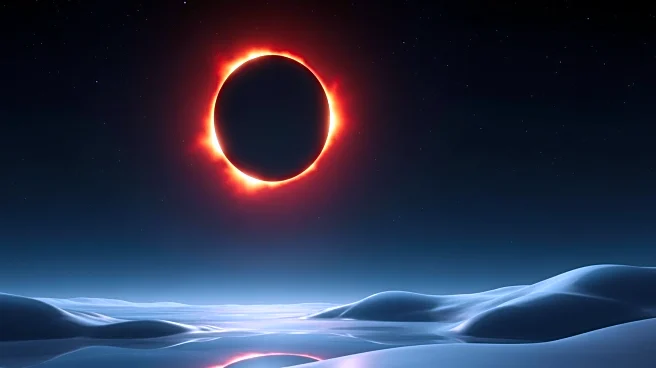
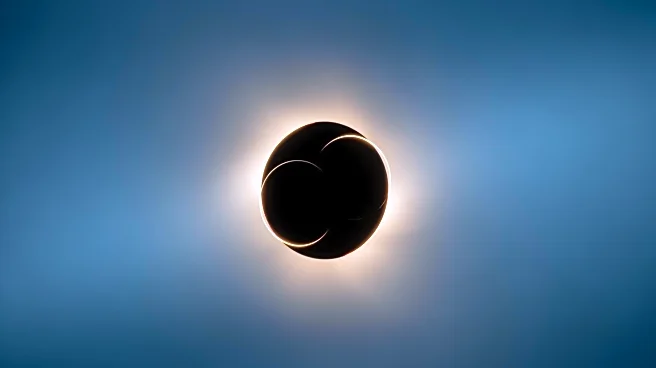
The annular solar eclipse, known as the 'Ring of Fire,' is scheduled for February 17, 2026. This astronomical event occurs when the Moon passes between the Earth and the Sun but does not completely cover the solar disk, leaving a bright ring of sunlight.
The eclipse will not be directly visible in the United States, as its path primarily passes through remote areas of Antarctica. However, U.S. audiences can follow the event through online broadcasts and specialized coverage.
Why It's Important?
While the eclipse is not visible in the U.S., it underscores the importance of global scientific collaboration and public engagement in astronomy. Such events stimulate interest in space science and provide educational opportunities for schools and science centers. The ability to view the eclipse through online platforms also highlights the role of technology in making scientific phenomena accessible to a wider audience.
What's Next?
Future eclipses, including a total solar eclipse in 2027, will offer more opportunities for direct observation in different parts of the world. These events continue to inspire interest in space exploration and scientific inquiry, encouraging educational initiatives and public participation in astronomy-related activities.