




What's Happening?
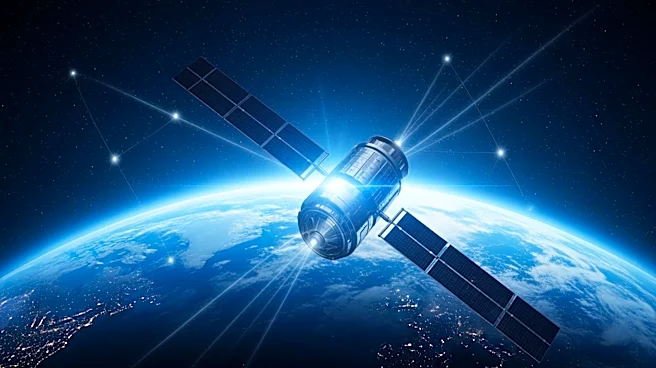
The International Space Station (ISS) has been a fixture in Earth's orbit for over 25 years, serving as a hub for scientific research and international collaboration. The station orbits Earth every 90 minutes, making it visible to observers on the ground
multiple times a day. The ISS is a joint project involving NASA, Roscosmos, the European Space Agency, the Japan Aerospace Exploration Agency, and the Canadian Space Agency. It has hosted over 290 astronauts from 26 countries, including 170 from the United States. The station is visible to the naked eye and can be tracked using NASA's 'Spot the Station' app, which provides notifications and real-time tracking data. The best times to view the ISS are shortly before sunrise or after sunset when it reflects sunlight.
Why It's Important?
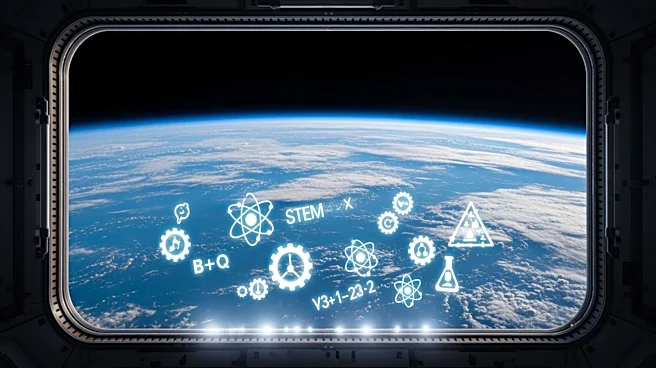
The visibility of the ISS from Earth serves as a reminder of the collaborative efforts in space exploration and the advancements in scientific research conducted in microgravity. The station's presence highlights the importance of international cooperation in space, fostering partnerships that transcend geopolitical boundaries. The ISS also plays a crucial role in preparing for future deep space missions, contributing to humanity's understanding of living and working in space. For the public, spotting the ISS can inspire interest in science and technology, encouraging educational pursuits in these fields.
What's Next?
As the ISS continues its mission, plans for its eventual retirement and deorbiting are underway. The station's legacy will likely influence future space endeavors, including the development of new space stations and missions to the Moon and Mars. The transition to commercial space stations is also anticipated, with private companies potentially taking over some of the ISS's functions. Continued international collaboration will be essential in these future projects, ensuring the sustainability and advancement of human space exploration.