





What's Happening?
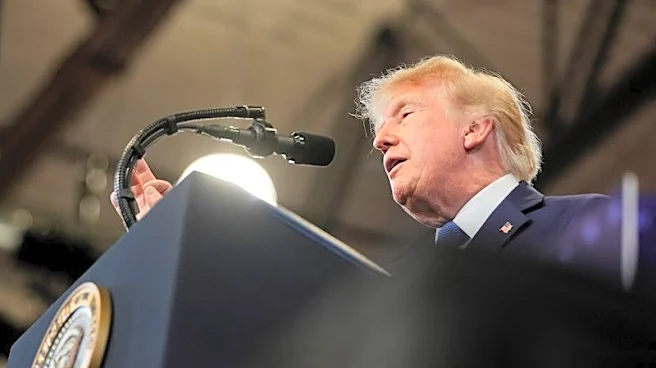
Democratic lawmakers in the U.S. have criticized President Trump's decision to significantly scale back joint military exercises with South Korea. This move, announced by President Trump on social media, was reportedly based on his good relations with North
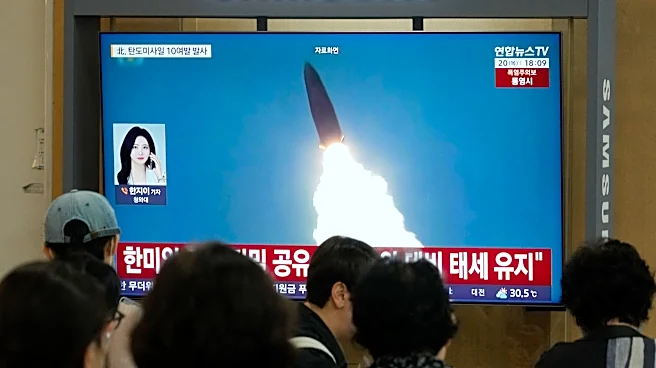
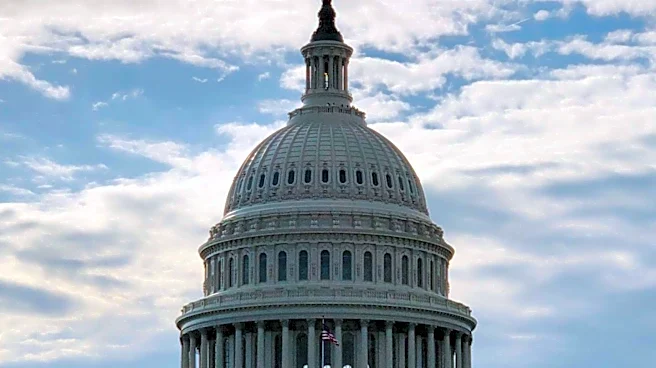
Korean leader Kim Jong-un and his dissatisfaction with Seoul's alleged refusal to assist the U.S. in a conflict with Iran. Senate Democratic Leader Chuck Schumer stated that North Korean leader Kim Yo-jong rejected President Trump's outreach attempts, indicating a lack of interest from Pyongyang. Senator Chris Van Hollen accused President Trump of cozying up to dictators without receiving concessions in return, while Senator Tammy Duckworth emphasized the importance of these exercises for maintaining U.S. force readiness and allied security. Democrats argue that this action could weaken the alliance between Seoul and Washington and that North Korea has made no concessions, continuing to supply weapons to Russia.
Why It's Important?
The criticism from U.S. Democrats regarding the reduction of military exercises with South Korea highlights significant concerns about national security and international alliances. These joint exercises are crucial for maintaining the readiness of U.S. forces and ensuring the interoperability of allied militaries, which is vital for deterring aggression in the Indo-Pacific region. Scaling back these exercises could be perceived as a weakening of the U.S. commitment to South Korea's security, potentially emboldening North Korea and other regional adversaries. Furthermore, the Democrats' assertion that President Trump received no concessions from Kim Jong-un raises questions about the effectiveness of his diplomatic approach and whether it genuinely serves U.S. interests. The broader implication is a potential erosion of trust among allies and a shift in regional power dynamics, which could have long-term consequences for U.S. foreign policy and global stability.
What's Next?
The immediate aftermath of President Trump's decision will likely involve continued political debate within the U.S. and diplomatic discussions with South Korea. Democratic lawmakers are expected to maintain pressure on the administration, potentially seeking to influence future defense policy or highlight these issues in upcoming political campaigns. South Korea may need to reassess its defense strategies and potentially seek assurances from the U.S. regarding their alliance. The situation with North Korea will also be closely watched, as any further actions from Pyongyang could either validate or contradict President Trump's rationale for reducing the exercises. The broader implications for U.S. alliances in Asia and the perception of U.S. leadership on the global stage will continue to unfold, with potential shifts in regional security arrangements and diplomatic priorities.
Beyond the Headlines
Beyond the immediate political and security concerns, the debate over military exercises with South Korea touches upon fundamental questions about the balance between diplomacy and military readiness. President Trump's approach, prioritizing personal relationships with leaders like Kim Jong-un over traditional military exercises, represents a departure from established foreign policy doctrines. This shift could lead to a re-evaluation of how the U.S. engages with both allies and adversaries, potentially favoring unconventional diplomatic tactics. However, it also carries the risk of undermining the institutional foundations of alliances and the collective security framework that has been built over decades. The ethical implications of potentially sacrificing military preparedness for perceived diplomatic gains, especially when those gains are not clearly demonstrated, will continue to be a subject of scrutiny and debate.