






What's Happening?
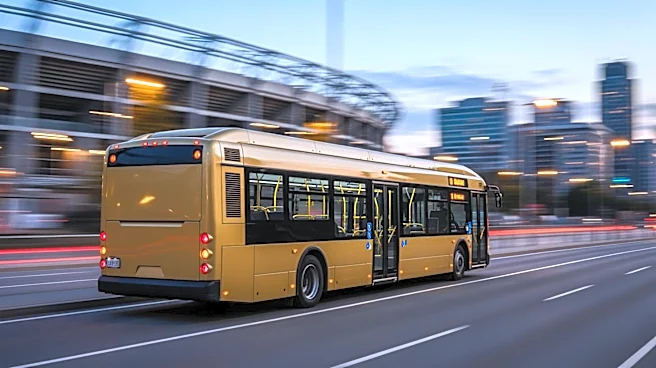
The Washington Metropolitan Area Transit Authority (Metro) has decided against constructing a new Metrorail station at the future site of the Washington Commanders' stadium at RFK Stadium. Instead, Metro has proposed the implementation of a rapid bus
line, referred to as the 'Gold Line,' which would connect to existing Metrorail and bus services at Union Station. This decision comes after Metro's analysis of potential locations for a new station, including Oklahoma Avenue and Benning Road NE. The agency cited the projected $1 billion cost and the timeline, which would not see the station completed by the stadium's expected opening in 2030, as key reasons for their recommendation. Metro also suggested significant upgrades to the existing Stadium-Armory Metro station to manage the anticipated increase in public transportation users, as more than half of the event attendees are expected to use public transit.
Why It's Important?
The decision to forego a new rail station in favor of a bus line has significant implications for transportation planning and urban development in Washington, D.C. The proposed 'Gold Line' could offer a more cost-effective and timely solution to accommodate the transportation needs of the new stadium, potentially easing traffic congestion and parking issues in the surrounding neighborhoods. However, the reliance on buses instead of a rail station may raise concerns about the capacity and efficiency of the transit system to handle large crowds, especially during major events. This decision reflects broader trends in urban transit planning, where cost and time constraints often necessitate innovative solutions over traditional infrastructure projects.
What's Next?
Metro's recommendation will likely lead to further discussions and planning regarding the implementation of the 'Gold Line' and the necessary improvements to the Stadium-Armory station. Stakeholders, including local government officials, community members, and transportation planners, will need to collaborate to ensure that the proposed solutions effectively address the transportation demands of the new stadium. Additionally, community concerns about traffic and parking will need to be addressed to gain public support for the project. The success of this initiative could influence future transportation planning decisions in the region.