




What's Happening?
The Dangote Group has increased its investment in Ethiopia's fertilizer plant project from $2.5 billion to over $4 billion. This expansion includes the development of a 110-kilometer pipeline, a 120-megawatt power plant, a polypropylene packaging facility,
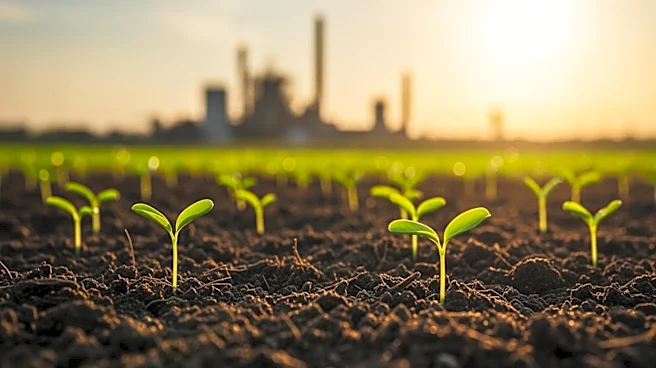
and a two-million-tonne NPK blending plant. The project, located in Gode, is set to produce 3 million metric tons of urea annually, making it one of the largest industrial investments in Ethiopia's agricultural sector. Prime Minister Abiy Ahmed and Aliko Dangote recently visited the site to assess the progress, which is advancing as planned. The initiative aims to bolster Ethiopia's domestic fertilizer production, reduce reliance on imports, and support millions of farmers, thereby enhancing agricultural productivity and economic self-reliance.
Why It's Important?
This investment is crucial for Ethiopia's agricultural transformation and economic development. By increasing domestic fertilizer production, the project aims to stabilize supply chains, improve crop yields, and strengthen food security in a country where agriculture is a key economic driver. The reduction in import dependency will also alleviate pressure on foreign exchange reserves. Furthermore, the project is expected to create new job opportunities and attract additional investments, contributing to Ethiopia's industrial growth. The Dangote Group's involvement underscores its expanding influence in Africa's industrial and fertilizer sectors, positioning itself as a major supplier of agricultural inputs across the continent.
What's Next?
As construction progresses, the Ethiopian government and Dangote Group will continue to collaborate to ensure the project's timely completion. Once operational, the plant is expected to play a pivotal role in Ethiopia's agricultural sector by providing a steady supply of fertilizers, thus supporting the country's broader industrialization goals. The project's success could also encourage further investments in Ethiopia's agro-industrial infrastructure, potentially leading to increased economic growth and development. Stakeholders will likely monitor the project's impact on local communities and the broader economy, assessing its contribution to Ethiopia's long-term agricultural and economic strategies.