





What's Happening?
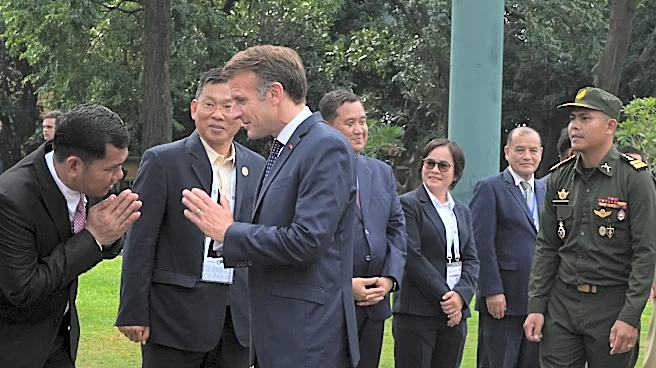
Human Rights Watch (HRW) has called on French President Emmanuel Macron to urge Cambodia, Vietnam, Laos, and Thailand to end transnational repression against political activists and dissidents. This appeal comes ahead of the Francophonie Summit in Phnom
Penh on November 15-16, 2026. HRW highlighted several cases, including the disappearance of three Viet Tan members—a Norwegian citizen, an Australian citizen, and a Vietnamese national—in Cambodia in September. Vietnamese police later announced their arrest on terrorism charges, but relatives and Viet Tan assert they were abducted from Cambodia. Other incidents include the assassination of former Cambodian opposition lawmaker Lim Kimya in Bangkok in January 2025, with suspects linked to Cambodia's former Prime Minister Hun Sen still at large, and the disappearance of Laotian asylum seeker Khieo Lapchanh in Thailand in September. HRW also noted instances where Thai authorities have deported dissidents to their home countries, where they faced imprisonment, and criticized Cambodia's selective enforcement of laws, prosecuting critics while allegedly protecting officials involved in cyber-scam operations.
Why It's Important?
The issue of transnational repression in Southeast Asia is critical for several reasons. Firstly, it undermines international human rights norms and the principle of non-refoulement, which prohibits returning individuals to countries where they face persecution. The alleged abductions and forced disappearances create a climate of fear among dissidents and refugees, regardless of their location. Secondly, the involvement of state actors in these actions, or their failure to investigate credible allegations, erodes trust in national legal systems and international cooperation. Thirdly, the selective application of law, where political opponents are targeted while powerful figures linked to criminal activities remain unpunished, highlights systemic corruption and a lack of accountability. This situation can destabilize regional security and human rights, potentially impacting diplomatic relations and international aid, as countries like France are urged to take a stronger stance on these abuses. The silence of international bodies, such as the Francophonie, on such matters could be interpreted as tacit approval, further emboldening repressive regimes.
What's Next?
President Macron is expected to use the Francophonie Summit to pressure his counterparts on the escalating transnational repression. HRW specifically calls for Cambodia to release its investigation into the disappearance of the Viet Tan members, and for Vietnam to release them and drop all charges. Cambodia is also urged to arrest and extradite suspects in Lim Kimya's murder and to prosecute those involved in cyber-scam operations, regardless of political connections. The French government should press Thailand, Vietnam, Cambodia, and Laos to end cross-border agreements that endanger refugees and dissidents. A public and principled intervention at the summit could demonstrate that the Francophone community's values extend beyond rhetoric to concrete action. Failure to address these issues could lead to continued human rights violations and further international condemnation of the involved nations.
Beyond the Headlines
The cases of transnational repression in Southeast Asia underscore a growing global challenge where authoritarian regimes extend their reach beyond national borders to silence dissent. This phenomenon often involves sophisticated tactics, including surveillance, intimidation, and even extrajudicial killings or forced disappearances, making it difficult for international bodies to intervene effectively. The complicity or inaction of neighboring states, often due to political or economic considerations, further exacerbates the problem, creating safe havens for perpetrators and leaving victims with little recourse. This trend has profound implications for the universality of human rights and the integrity of international law, as it challenges the sovereignty of nations and the protection of individuals within their borders. The ethical dilemma for international organizations and democratic states lies in balancing diplomatic relations with the imperative to uphold human rights, often requiring difficult decisions that can strain alliances but are crucial for maintaining a principled global order.