



What's Happening?
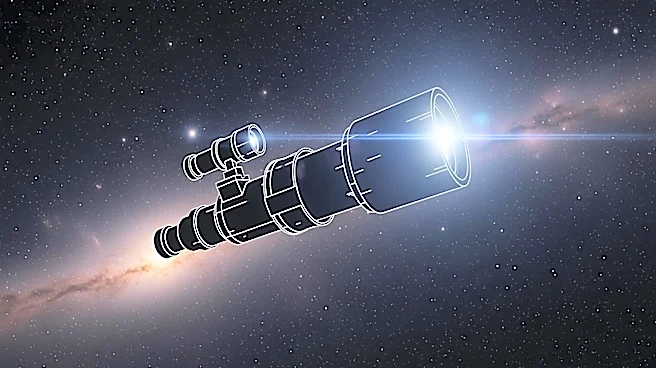
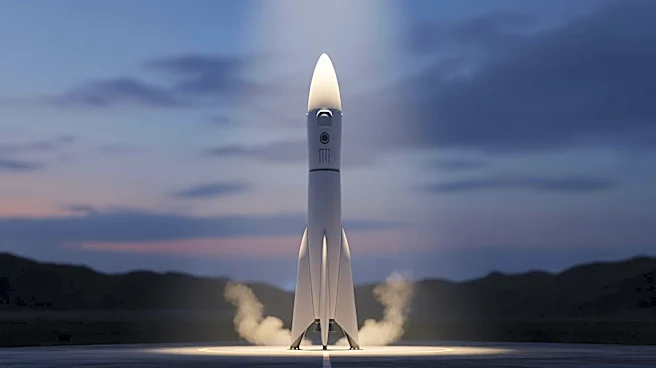
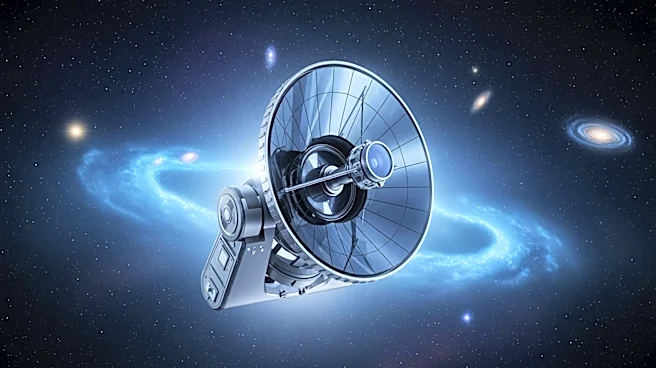
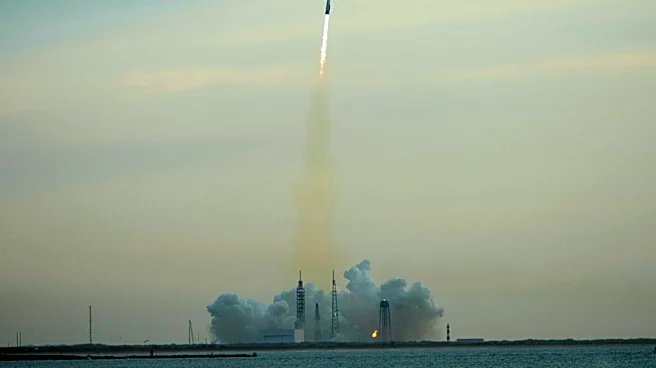
NASA has introduced the Roman space telescope, a new instrument designed to explore vast areas of the universe and discover tens of thousands of exoplanets. The telescope, named after astronomer Nancy Grace Roman, is set to launch aboard a SpaceX rocket
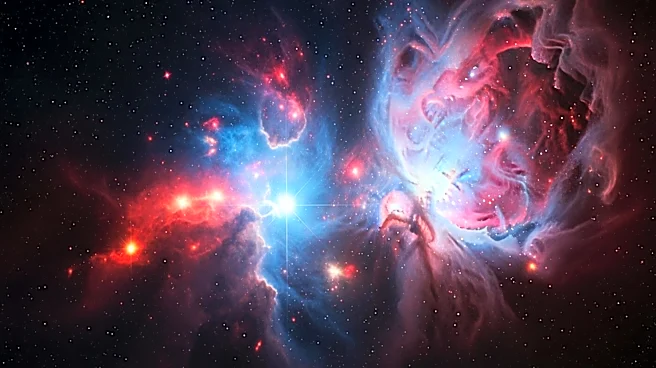
as early as September. It features a wide-angle lens that provides a field of view 100 times larger than the Hubble Space Telescope, allowing it to capture extensive data on galaxies, supernovae, and stars. The Roman telescope will also study dark matter and dark energy, which are believed to make up 95% of the universe. This mission aims to enhance our understanding of the universe's structure and the forces that govern it.
Why It's Important?
The Roman telescope represents a significant advancement in space exploration and astronomy. By mapping the universe and identifying new exoplanets, it could provide insights into the potential for life beyond Earth. The study of dark matter and dark energy is crucial for understanding the fundamental forces that shape the universe. The data collected by Roman will complement findings from other telescopes, such as the James Webb Space Telescope, and could lead to groundbreaking discoveries in astrophysics. This mission underscores NASA's commitment to expanding human knowledge of the cosmos and could have profound implications for science and technology.
What's Next?
Following its launch, the Roman telescope will begin its mission to collect and transmit data back to Earth. Scientists and researchers will analyze this data to identify areas of interest for further study. The telescope's findings could lead to new research initiatives and collaborations with other space agencies and observatories. As the mission progresses, the scientific community will be keenly observing for any unexpected discoveries that could reshape our understanding of the universe.
Beyond the Headlines
The Roman telescope's ability to study dark matter and dark energy could lead to a deeper understanding of these mysterious components of the universe. This research might reveal new physics beyond the current models and theories. Additionally, the mission could inspire future generations of scientists and engineers, highlighting the importance of space exploration in addressing fundamental questions about our existence and the universe.