





What's Happening?
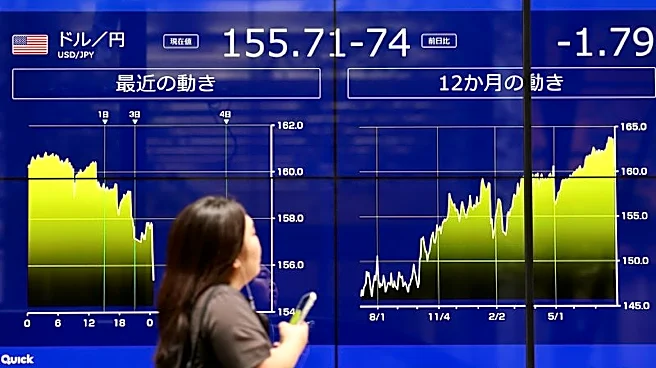
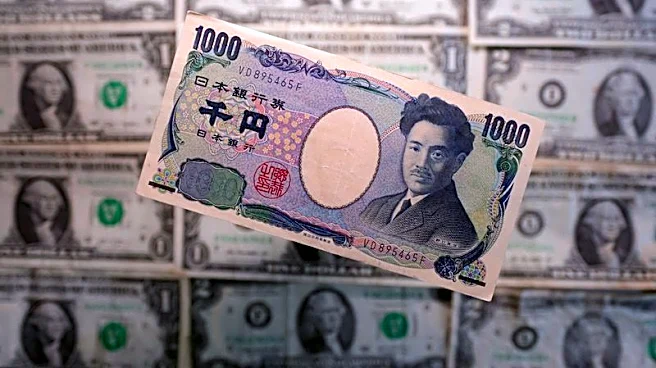
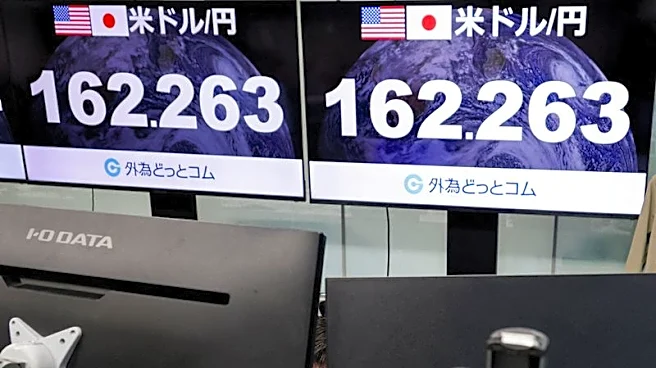
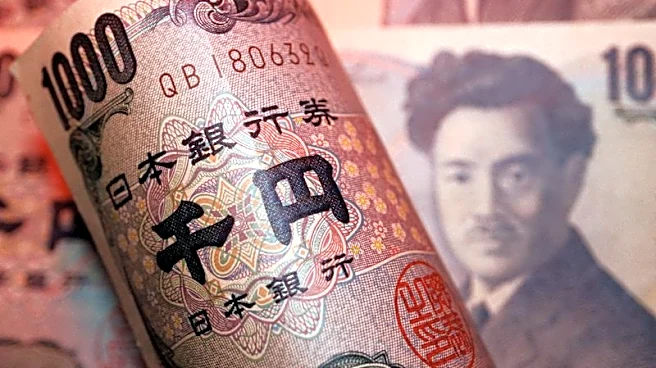
The Japanese yen has strengthened for the third consecutive session following a joint intervention by Japan and the United States in the foreign exchange market. This intervention was aimed at supporting the yen, which had been under pressure, reaching
40-year lows against the U.S. dollar. The coordinated action involved yen-buying efforts by both countries, with Japan reportedly purchasing significant amounts of yen to stabilize its value. The intervention has led to a notable increase in the yen's value, with traders remaining vigilant for further market actions.
Why It's Important?
The strengthening of the yen is crucial for Japan, as its prolonged weakness has been contributing to higher import costs and inflation, impacting the economy and consumer prices. The joint intervention reflects the strategic importance of maintaining currency stability, not only for Japan but also for global markets. The move also highlights the collaborative efforts between Japan and the U.S. to address economic challenges and prevent potential spillover effects on global financial systems.
What's Next?
Market participants are on alert for any further interventions or policy changes that could affect the yen's value. The Bank of Japan's monetary policy decisions will be closely monitored, with potential interest rate adjustments being a key focus. The U.S. Federal Reserve's actions, particularly regarding interest rates, will also play a significant role in influencing currency markets. Ongoing communication and coordination between Japan and the U.S. are expected as they navigate these economic challenges.