
What's Happening?
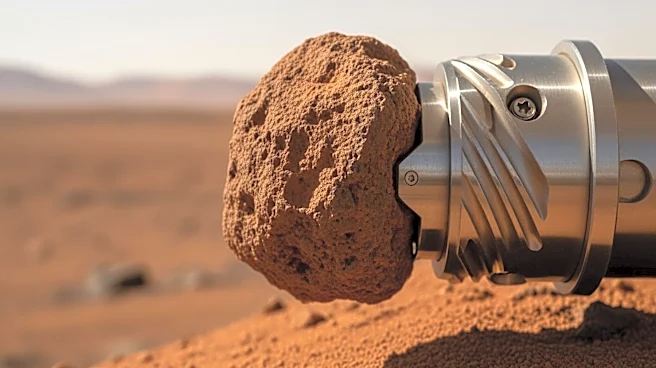
NASA's Curiosity rover, currently exploring Mars, encountered a challenge when a rock, nicknamed 'Atacama,' became lodged on its drill. The incident occurred on April 25, 2026, and engineers spent several
days repositioning the rover's arm and vibrating the drill to dislodge the rock, which was successfully removed on May 1. The rock, approximately 1.5 feet in diameter and 6 inches thick, was captured in a mosaic of images by the rover's Mast Camera. The images were sent back to Earth and processed to resemble how the scene would appear under daytime lighting conditions on Earth. Curiosity's mission is managed by NASA's Jet Propulsion Laboratory, with the Mast Camera operated by Malin Space Science Systems.
Why It's Important?
The incident highlights the challenges faced by robotic explorers on Mars, where unexpected obstacles can impact mission operations. Successfully resolving such issues is crucial for the continued success of the mission, which aims to gather valuable data about the Martian surface and geology. The ability to adapt and overcome technical challenges ensures that the rover can continue its scientific exploration, contributing to our understanding of Mars and the potential for past life on the planet. This mission is part of NASA's broader Mars Exploration Program, which seeks to pave the way for future human exploration.
What's Next?
Curiosity will continue its exploration of the Martian surface, focusing on analyzing rock samples and gathering data to understand the planet's history and geology. The mission team will use the insights gained from this incident to improve operational protocols and prepare for similar challenges in the future. Ongoing analysis of the data collected by Curiosity will contribute to the planning of future Mars missions, including those involving human exploration.