




What's Happening?
Republicans in the House of Representatives have delayed a scheduled vote on a war powers resolution aimed at compelling President Trump to withdraw from the war with Iran. The vote, initially planned for Thursday, has been pushed to June. This delay occurred
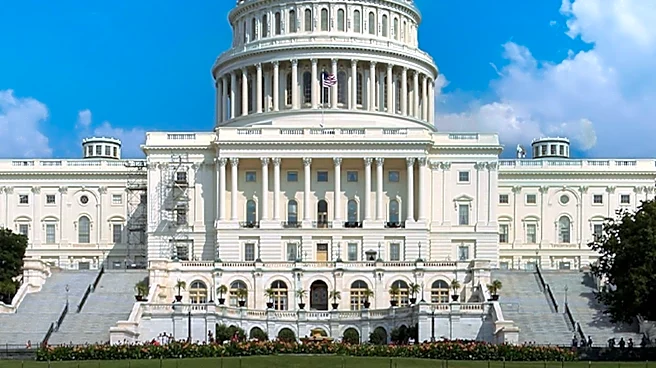
as it became evident that Republicans lacked sufficient votes to defeat the Democratic-led legislation. The resolution seeks to rein in President Trump's military campaign, which was initiated over two months ago without congressional approval. Democratic leaders, including House Democratic leader Hakeem Jeffries, criticized the delay as 'cowardly,' asserting that they had the necessary votes for the resolution to pass. Representative Jared Golden of Maine, who previously voted against a similar resolution, has indicated he will support this legislation in the upcoming vote. The move highlights growing frustration on Capitol Hill regarding the ongoing conflict and its impact.
Why It's Important?
This delay signifies a notable shift in congressional dynamics concerning U.S. foreign policy and presidential war powers. The inability of the Republican party to garner sufficient support to block the resolution indicates a weakening consensus within the party regarding President Trump's handling of the Iran conflict. This growing dissent, even among rank-and-file Republicans, suggests a potential reassertion of congressional authority over military engagements, as outlined in the War Powers Resolution of 1973. The ongoing stalemate in the Strait of Hormuz, which has disrupted global shipping and led to elevated gas prices in the U.S., adds economic pressure to the political debate. A successful passage of such a resolution could set a precedent for future presidential military actions, requiring greater congressional oversight and approval, thereby impacting the balance of power between the executive and legislative branches on matters of war.
What's Next?
The House vote on the war powers resolution is now anticipated in June. This delay provides both Democratic and Republican leadership additional time to strategize and potentially rally more support or opposition. The stated reason for the delay by House Republican Leader Steve Scalise was to allow absent lawmakers to participate, suggesting an attempt to consolidate votes against the resolution. However, the growing bipartisan concern over the war in Iran, as evidenced by Representative Golden's change of stance and the increasing number of Republicans willing to defy President Trump, indicates that the resolution still has a strong chance of passing. If passed by the House, the resolution would then move to the Senate, where a similar war powers resolution has already advanced to a final vote, indicating potential for broader congressional action to limit presidential military authority.
Beyond the Headlines
The struggle over the Iran war powers resolution reflects a deeper constitutional tension regarding the allocation of war-making powers between the President and Congress. The War Powers Resolution of 1973 mandates that presidents must seek congressional authorization for military conflicts lasting beyond 60 days. The current debate underscores the ongoing challenge of enforcing this resolution, particularly when a president initiates military action without explicit congressional approval. The increasing willingness of lawmakers, including members of the President's own party, to challenge executive authority on military matters could signal a long-term shift towards greater congressional assertiveness in foreign policy. This could lead to more robust debates and stricter requirements for future military interventions, potentially altering the U.S.'s approach to international conflicts and its global military posture.