



What's Happening?
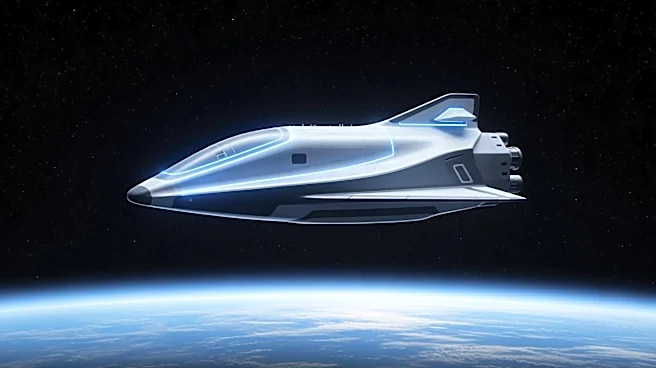
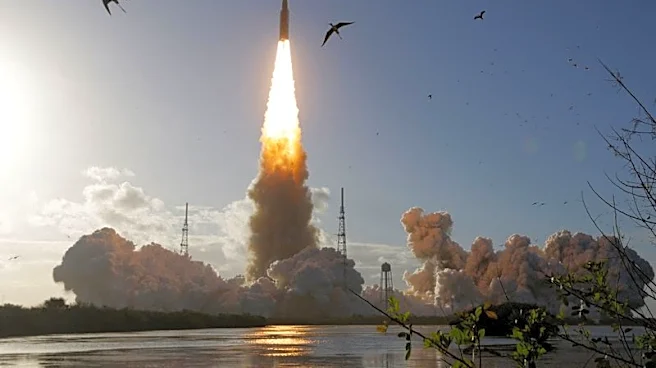
Northrop Grumman's Cygnus XL cargo spacecraft successfully launched aboard a SpaceX Falcon 9 rocket from Cape Canaveral Space Force Station in Florida on April 11, 2026. The spacecraft is part of the Commercial Resupply Services-24 mission, carrying over
11,000 pounds of scientific investigations and cargo to the International Space Station (ISS). The launch occurred at 7:41 a.m. EDT, and Cygnus XL is expected to reach its preliminary orbit about 10 minutes after liftoff, with solar arrays deploying approximately an hour and 45 minutes later. NASA astronauts Jack Hathaway and Chris Williams will capture the spacecraft using the station's Canadarm2 robotic arm on April 13, with live coverage available on NASA+, Amazon Prime, and YouTube.
Why It's Important?
The successful launch of Cygnus XL is crucial for maintaining the continuous flow of scientific research and supplies to the ISS, supporting ongoing experiments and technological demonstrations. This mission underscores the collaboration between NASA and commercial partners like Northrop Grumman and SpaceX, highlighting the importance of commercial resupply services in sustaining the ISS's operations. The cargo includes vital research materials that will contribute to advancements in various scientific fields, including quantum science and biotechnology, potentially leading to breakthroughs in computing technology and medical treatments.
What's Next?
Following its capture by the ISS's robotic arm, Cygnus XL will be installed on the Unity module's Earth-facing port, where it will remain until October. During its stay, the spacecraft will facilitate numerous scientific experiments conducted by the Expedition 74/75 crew. After completing its mission, Cygnus XL will depart the ISS, disposing of thousands of pounds of trash through its re-entry into Earth's atmosphere, where it will burn up harmlessly.