



What's Happening?
Congress has passed an appropriations bill that significantly increases funding for the Department of Energy's Office of Energy Efficiency and Renewable Energy (EERE), despite President Trump's request for substantial cuts. The bill allocates $3.1 billion
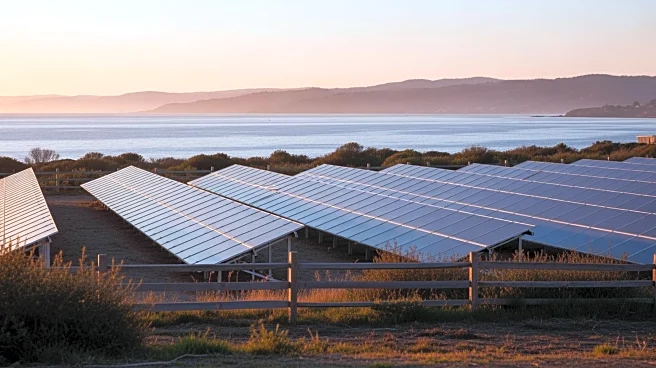
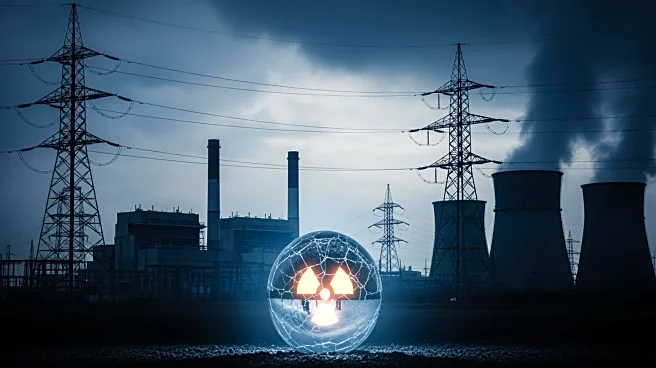
to EERE, a decrease from the previous year's $3.46 billion but a substantial increase from the $880 million requested by the White House. Notably, the bill boosts funding for solar energy from $41.9 million to $220 million and for wind energy from $29.8 million to $100 million. This move comes as a response to the administration's proposal to eliminate funding for these renewable energy programs. The bill also reallocates $5.1 billion in unobligated funds from the Infrastructure Investment and Jobs Act, directing $3.1 billion to the Office of Nuclear Energy for its Advanced Reactor Deployment Program.
Why It's Important?
The passage of this appropriations bill underscores Congress's commitment to renewable energy and its willingness to counter the administration's proposed budget cuts. By increasing funding for solar and wind energy, the bill supports the growth of the renewable energy sector, which is crucial for reducing carbon emissions and combating climate change. The reallocation of funds to the Office of Nuclear Energy also highlights the importance of maintaining a diverse energy portfolio, including nuclear power, to ensure energy security and stability. This decision may have significant implications for the U.S. energy industry, potentially leading to job creation and technological advancements in renewable and nuclear energy sectors.
What's Next?
With President Trump expected to sign the bill into law, the focus will shift to the implementation of the allocated funds. The Department of Energy will need to manage the increased budget effectively to support ongoing and new projects in renewable energy. Additionally, stakeholders in the energy sector, including private companies and research institutions, may seek to capitalize on the increased funding opportunities. The bill's passage may also prompt further discussions on the future of U.S. energy policy, particularly regarding the balance between renewable and traditional energy sources.
Beyond the Headlines
The appropriations bill reflects a broader political dynamic where Congress asserts its power over budgetary decisions, challenging the executive branch's priorities. This development may influence future legislative actions, particularly in areas where there is a divergence between congressional and presidential agendas. The increased funding for renewable energy also aligns with global trends towards sustainable energy solutions, potentially enhancing the U.S.'s position in international climate negotiations and collaborations.