







What's Happening?
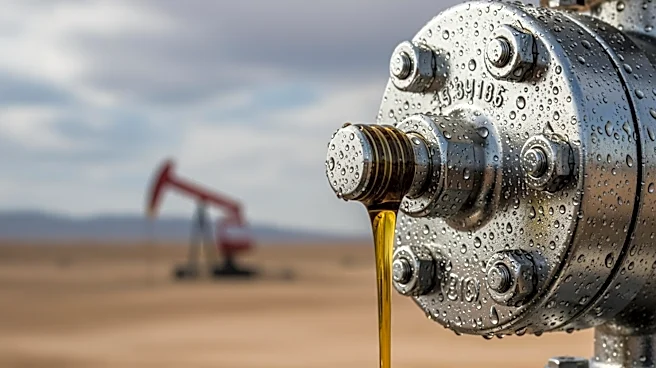
The Strait of Hormuz, a critical chokepoint for global oil transportation, remains effectively shut, leading to significant volatility in oil prices. Angelina Lai, Chief Investment Officer at St. James's Place, has highlighted the ongoing uncertainty
in oil markets due to this disruption. The closure of the strait is causing oil prices to fluctuate wildly, a situation exacerbated by a potentially prolonged high-interest rate environment. Lai suggests that investors might consider rotating into undervalued markets such as Korea and investing in inflation-linked and government bonds to hedge against inflation and potential credit stress.
Why It's Important?
The Strait of Hormuz is a vital passage for oil shipments, with a significant portion of the world's oil supply passing through it. The current blockage is not only affecting oil prices but also has broader implications for global energy markets and economic stability. The volatility in oil prices can lead to increased costs for industries reliant on oil, potentially impacting consumer prices and economic growth. Additionally, the situation underscores the vulnerability of global supply chains to geopolitical tensions and infrastructure disruptions. Investors and policymakers are closely monitoring the situation to mitigate risks and adapt strategies accordingly.
What's Next?
The long-term impact of the Strait of Hormuz blockage will largely depend on the extent of infrastructure damage and the duration of the closure. If the strait remains closed for an extended period, it could lead to sustained high oil prices and increased economic pressure on oil-importing countries. Stakeholders, including governments and energy companies, may need to explore alternative routes and sources to ensure energy security. Additionally, there could be increased diplomatic efforts to resolve the situation and restore normalcy in oil transportation through the strait.