






What's Happening?
Israel Defense Forces Chief of Staff Lt. Gen. Eyal Zamir stated on Wednesday that maintaining control of the Jordan Valley is crucial for Israel's national security. This declaration was made during his tour of military posts and a border barrier under
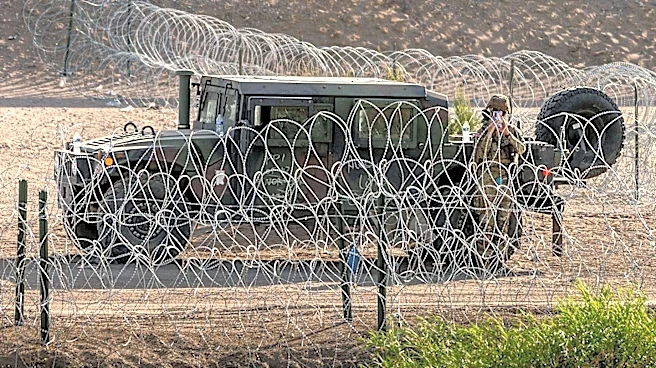
construction along the frontier with Jordan. Zamir highlighted the historical, Zionist, and security significance of the Jordan Valley, referring to it as the 'State of Israel’s eastern defensive shield.' He emphasized that control over this area is an essential component of the nation's security and strategic depth. During his visit to the 96th Division, established during 'Operation Rising Lion,' Zamir described it as a practical implementation of lessons learned from the October 7, 2023, Hamas-led invasion. The division is currently deploying along military posts ahead of civilian communities, enhancing its intelligence collection and lethality. Zamir stressed the need for constant readiness, vigilance, and proactive measures to protect borders and civilians, issuing directives for strengthening operational readiness and upholding law and order in the sector.
Why It's Important?
Lt. Gen. Zamir's statements underscore Israel's strategic priorities in maintaining its eastern border security, particularly in the wake of recent conflicts. The emphasis on the Jordan Valley as a 'defensive shield' highlights its perceived role in preventing future incursions and maintaining territorial integrity. This stance has significant implications for regional stability and any future peace negotiations, as control over the Jordan Valley has long been a contentious issue. For the U.S., a key ally of Israel, these developments are important as they influence regional security dynamics and potential diplomatic efforts. The deployment of the 96th Division and its focus on intelligence and lethality indicate a proactive military posture aimed at deterring threats and responding effectively to unexpected developments, reflecting a shift in defense strategy post-October 7. This could also impact U.S. foreign policy considerations regarding military aid and diplomatic engagement in the Middle East.
What's Next?
Following Lt. Gen. Zamir's directives, the IDF is expected to continue strengthening its operational readiness and defensive posture in the Jordan Valley. This may involve further deployment of military assets, enhanced intelligence gathering, and continued construction of border barriers. The emphasis on implementing lessons from the October 7 events suggests a sustained focus on preventing similar attacks and improving rapid response capabilities. Stakeholders, including regional governments and international bodies, will likely monitor these developments closely, as Israel's actions in the Jordan Valley could influence broader geopolitical discussions about borders and security in the region. The ongoing military presence and strategic importance placed on the Jordan Valley by Israel will likely remain a significant factor in any future peace initiatives or security arrangements.
Beyond the Headlines
The declaration of the Jordan Valley as an 'eastern defensive shield' goes beyond immediate security concerns, touching upon deeper historical and ideological dimensions for Israel. This framing reinforces the long-held strategic importance of the area, linking it to national identity and existential security. The continuous fortification and military presence in the valley could be seen as a long-term commitment to maintaining control, potentially shaping demographic and political realities on the ground for decades. Ethically, the deployment of military forces in proximity to civilian communities and the ongoing construction of barriers raise questions about human rights and freedom of movement for local populations. Legally, the status of the Jordan Valley under international law remains a complex issue, and Israel's actions could further entrench its claims, potentially complicating future diplomatic resolutions and international relations.