



What's Happening?
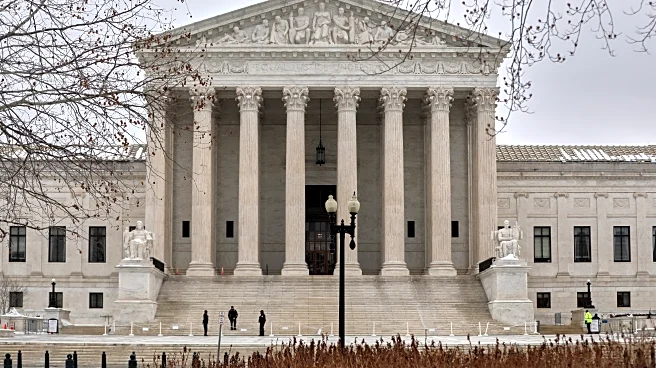
The U.S. Supreme Court has ruled against President Trump's tariffs, declaring them illegal in a 6-3 decision. The court found that Trump lacked the authority to impose these tariffs under the International Emergency Economic Powers Act (IEEPA) of 1977,
which he used as the legal basis for his actions. The ruling marks a significant setback for Trump's economic agenda, as it challenges the use of emergency powers to implement trade policies. The decision leaves the future of the tariffs uncertain, as the court did not specify remedies for importers who paid these tariffs, leaving the matter to lower courts.
Why It's Important?
This ruling has major implications for U.S. trade policy and the executive branch's power to unilaterally impose tariffs. It underscores the need for clear congressional authorization for such economic measures, potentially limiting the president's ability to use emergency powers in trade matters. The decision could affect various industries reliant on imports, as it may lead to changes in tariff structures and trade agreements. Businesses and consumers who have been impacted by these tariffs may seek refunds or adjustments, influencing economic relations and market stability.
What's Next?
The case will return to lower courts to determine the specific consequences for the tariffs already imposed. This could involve legal battles over potential refunds to importers and adjustments to current trade policies. President Trump has indicated plans to impose a new global tariff using the Trade Act of 1974, which may lead to further legal and political challenges. The ruling may also prompt legislative efforts to clarify the scope of presidential powers in trade matters, potentially reshaping future U.S. trade policy.