



What's Happening?
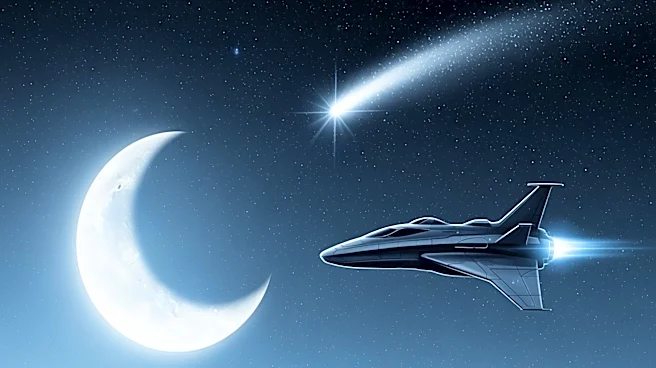
NASA's Artemis II mission, which includes astronauts Reid Wiseman, Victor Glover, Christina Koch, and Canadian astronaut Jeremy Hansen, is set to fly around the moon. During this mission, the astronauts may have the opportunity to observe Comet C/2026
A1 (MAPS) if it survives its close approach to the sun. The comet, discovered by amateur astronomers, is expected to pass within 101,100 miles of the sun. This close encounter poses a significant risk to the comet's survival, as most 'sungrazers' do not withstand such proximity to the sun. The mission offers a rare chance for the astronauts to witness a celestial event from space.
Why It's Important?
The potential sighting of Comet MAPS during the Artemis II mission underscores the mission's significance in advancing human space exploration. It highlights the collaboration between professional and amateur astronomers in discovering and studying celestial phenomena. The mission also represents a milestone in NASA's efforts to return humans to the moon, providing valuable data and experience for future lunar and deep space missions. Observing the comet could offer insights into the behavior and composition of such celestial bodies, contributing to our understanding of the solar system.
What's Next?
If Comet MAPS survives its solar encounter, it could become visible again, offering a unique observational opportunity for the Artemis II crew. The mission's success could pave the way for future lunar exploration and potential missions to other celestial bodies. The data collected during the mission will inform NASA's Artemis program, which aims to establish a sustainable human presence on the moon and prepare for future missions to Mars.