







What's Happening?
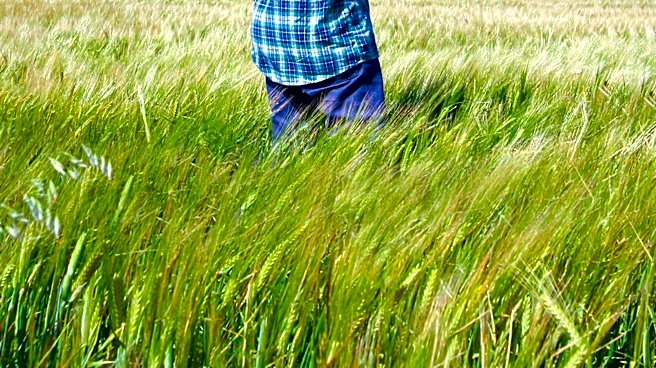
U.S. farmers are increasingly exploring perennial grains, such as Kernza, as a strategy to build resilience against extreme weather conditions like drought and intense rainfall. Unlike annual grains that require yearly planting and harvesting, perennials
are planted once every few years, offering benefits such as deeper root systems that can access water more effectively during droughts and absorb excess water during heavy rains, preventing soil erosion. These deeper roots also sequester more carbon, contributing to environmental benefits. Researchers, including those at the Land Institute in Kansas, are actively developing perennial versions of common grains like wheat, sorghum, and rice. While perennial grains offer significant advantages for soil health and environmental sustainability, challenges remain, including lower grain yields compared to annual crops, difficulties in harvesting, and an underdeveloped market for these products. Despite these hurdles, farmers like David Mueller are adopting Kernza to rebuild soil and reduce fertilizer use, finding it profitable due to premium pricing.
Why It's Important?
The adoption of perennial grains represents a significant shift in U.S. agricultural practices, driven by the increasing frequency and intensity of extreme weather events. This move is crucial for the long-term sustainability of American farming, as traditional annual cultivation methods contribute to rapid soil degradation and carbon release. By improving soil health and carbon sequestration, perennial grains can help mitigate the effects of climate change and ensure agricultural productivity for future generations. The economic implications are substantial for farmers, who face mounting costs and risks from unpredictable weather. While current yields are lower, the potential for reduced input costs (fertilizer, fuel) and premium market prices could offer a more stable income stream. However, the underdeveloped market and lack of federal funding for perennial grains, in contrast to traditional crops, pose barriers to widespread adoption. This situation highlights a critical need for policy adjustments and market development to support farmers transitioning to more sustainable practices, impacting the entire agricultural supply chain from producers to consumers.
What's Next?
The future of perennial grains in the U.S. will likely involve continued research and development to improve yields and overcome harvesting challenges. Organizations like the Land Institute will play a crucial role in domesticating and refining these crops. Efforts to develop stable markets and increase consumer awareness for products made with perennial grains, such as Kernza, are also anticipated. This will require collaboration between farmers, researchers, food producers, and potentially larger industry players to scale up production and distribution. Policy changes, including federal support and incentives for perennial grain cultivation, could significantly accelerate adoption. Without comparable federal bridge payments and assistance that traditional crops receive, the transition will remain slow. The success of pilot programs and the ability to demonstrate consistent profitability will be key factors in encouraging more farmers to integrate perennial grains into their rotations, ultimately shaping the landscape of American agriculture and its environmental footprint.
Beyond the Headlines
The shift towards perennial grains has deeper implications beyond immediate agricultural and environmental benefits. It challenges the conventional industrial agricultural model, which has prioritized high yields of annual crops at the expense of soil health and ecological balance. This movement could foster a more regenerative agricultural system, emphasizing long-term ecological resilience and biodiversity. Ethically, it raises questions about stewardship of the land and the responsibility of current generations to ensure food security and environmental integrity for future ones. Culturally, it could lead to a renewed appreciation for diverse agricultural practices and a closer connection between consumers and the origins of their food. The economic model of perennial grains, with its potential for premium pricing and reduced input costs, could also empower smaller, more sustainable farming operations, potentially decentralizing food production and fostering local economies. This transition represents a broader societal re-evaluation of food systems, environmental impact, and the role of agriculture in a changing climate.