







What's Happening?
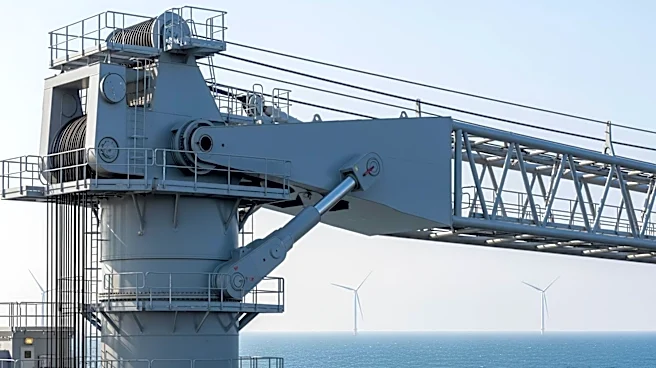
A consortium led by Stillstrom by Maersk has received $5.8 million in funding from the European Union’s Horizon Europe program to develop and test offshore charging infrastructure for vessels at anchor in Denmark. The initiative, known as the SPARK project,
aims to establish a pilot Offshore Power Zone in Skagen, one of Northern Europe’s busiest anchorage hubs. This project targets the reduction of greenhouse gas emissions from ships that run their engines while stationary between operations. The consortium includes Aalborg University and other partners, focusing on creating sustainable solutions for maritime operations.
Why It's Important?
The development of offshore charging infrastructure is crucial for reducing the maritime industry's carbon footprint. By providing a sustainable alternative to running engines while ships are stationary, the SPARK project could significantly cut greenhouse gas emissions. This initiative aligns with global efforts to combat climate change and transition to cleaner energy sources. The success of this pilot could pave the way for broader adoption of similar technologies, potentially transforming maritime operations and setting a precedent for other regions to follow.
What's Next?
The SPARK project will unfold over three years, during which the consortium will develop and test the offshore charging infrastructure. If successful, this pilot could lead to the implementation of similar systems in other busy anchorage hubs worldwide. Stakeholders in the maritime industry, including ship operators and environmental groups, will likely monitor the project's progress closely. The outcomes could influence future regulations and investments in sustainable maritime technologies.