
What's Happening?
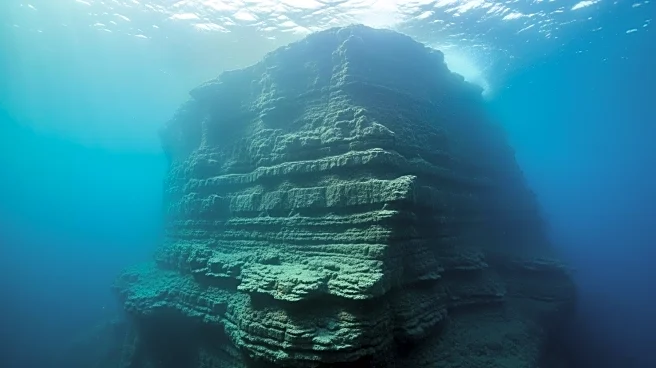
A recent study published in Geophysical Research Letters has revealed a massive, 12.4-mile-thick geological structure beneath Bermuda, challenging existing theories about the island's formation. Researchers
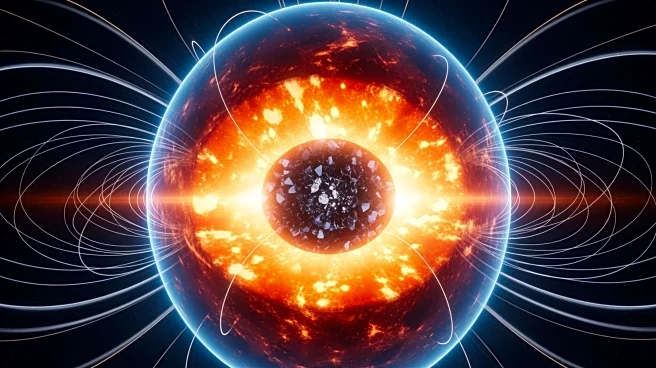
from Carnegie Science and Yale University used advanced seismic imaging to discover this unique layer of rock, which lies below the oceanic crust and within the tectonic plate on which Bermuda sits. This discovery raises questions about Bermuda's geological history and the processes that led to the formation of this deep rock layer. The structure is unlike anything found elsewhere on Earth, suggesting that Bermuda's volcanic past may be linked to the ancient supercontinent Pangea, which began breaking apart roughly 300 million years ago.
Why It's Important?
The discovery of this thick rock layer beneath Bermuda has significant implications for our understanding of Earth's tectonics. Typically, oceanic swells like Bermuda are associated with volcanic activity, yet Bermuda's last volcanic eruption occurred over 31 million years ago. The presence of this rock layer could explain why Bermuda's oceanic swell remains elevated despite the lack of active eruptions. This finding suggests that remnants of past volcanic activity may be supporting the swell, preventing it from subsiding over millions of years. Understanding such unique geological features can provide insights into the broader planetary processes and the forces that shaped much of Earth's surface during the breakup of Pangea.
What's Next?
Further research is needed to fully understand the composition and origin of the rock layer beneath Bermuda. Scientists will continue to study the region to uncover more about Bermuda's past and its connection to ancient volcanic activity. This research could also provide clues about the forces that shaped Earth's surface during the breakup of Pangea. As scientists delve deeper into this discovery, it may lead to a reevaluation of geological theories related to oceanic swells and volcanic islands.
Beyond the Headlines
The discovery of this unique geological structure beneath Bermuda highlights the importance of studying extreme locations to understand Earth's evolving geology. The carbon-rich lavas found in Bermuda suggest that the island's volcanic activity came from deep within the mantle, contrasting with the usual sources of volcanic islands in the Pacific and Indian Oceans. This deep mantle material could explain why Bermuda's volcanic history is so different from other islands of its type. Understanding these extreme locations helps provide insight into more typical geological processes occurring on Earth today.