




What's Happening?
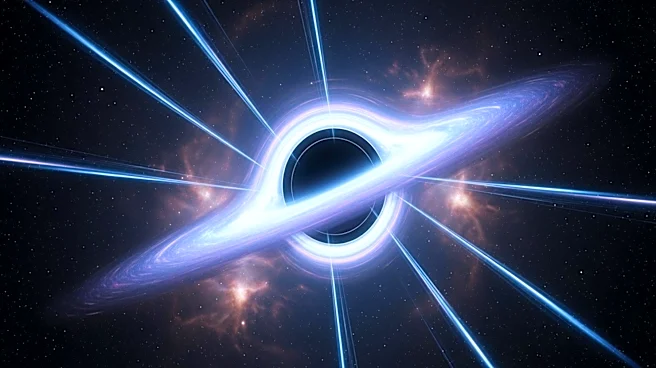
A new scientific model suggests that the universe may operate in seven dimensions, offering a potential solution to the longstanding mystery of black holes and dark matter. Richard Pinčák from the Slovak Academy of Sciences has proposed that, in addition
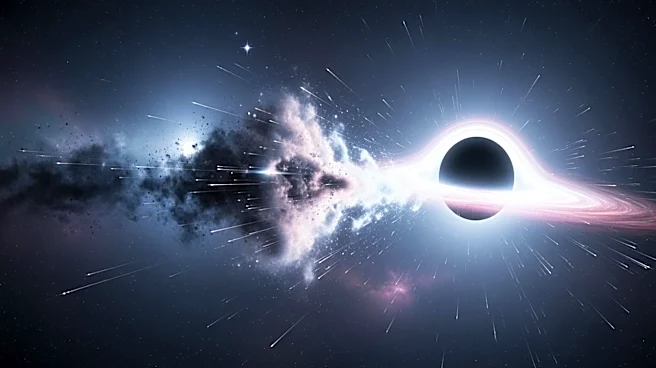
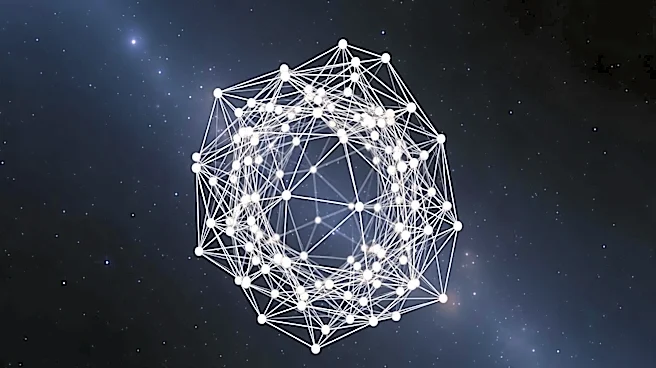
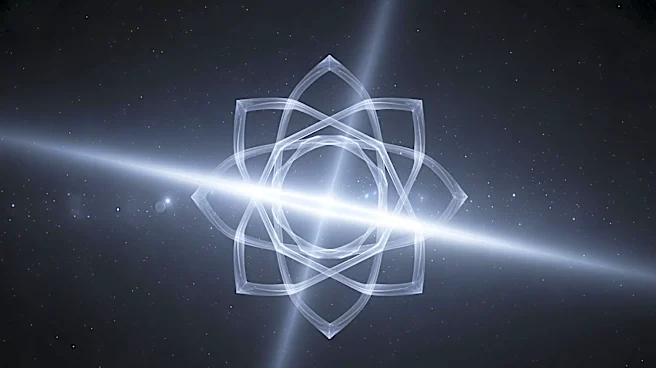
to the four known dimensions, there are three hidden dimensions that form complex geometric shapes called G2-manifolds. These hidden dimensions could generate torsion fields that prevent black holes from completely evaporating, leaving behind dense remnants that retain all consumed information. This theory could also explain the nature of dark matter, which constitutes a significant portion of the universe's mass but remains undetectable.
Why It's Important?
This groundbreaking theory challenges traditional understandings of physics and cosmology, offering a new perspective on some of the universe's most perplexing phenomena. If proven, the existence of hidden dimensions could revolutionize our understanding of the universe's structure and the fundamental forces at play. The implications for cosmology and theoretical physics are profound, potentially providing answers to questions that have puzzled scientists for decades. Additionally, the theory's potential to explain dark matter could have significant ramifications for our understanding of the universe's composition and evolution.
What's Next?
While the theory presents exciting possibilities, detecting these hidden dimensions and their effects remains a significant challenge. Current technology is insufficient to test the model's predictions, but future advancements in gravitational wave detectors or cosmic microwave background analyzers may provide the necessary tools. As research continues, the scientific community will be closely monitoring developments in this area, which could lead to new discoveries and a deeper understanding of the universe. The pursuit of evidence for these hidden dimensions will likely drive future research efforts in cosmology and theoretical physics.