






What's Happening?
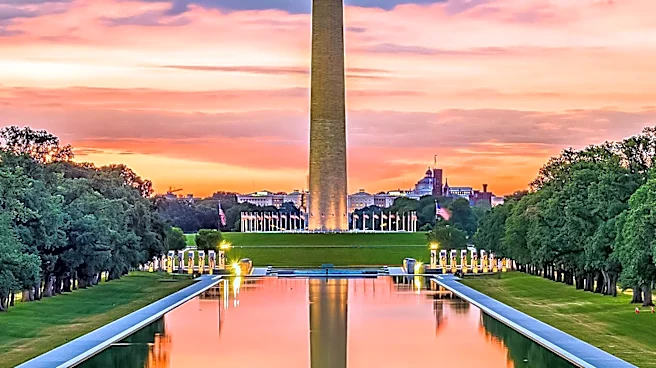
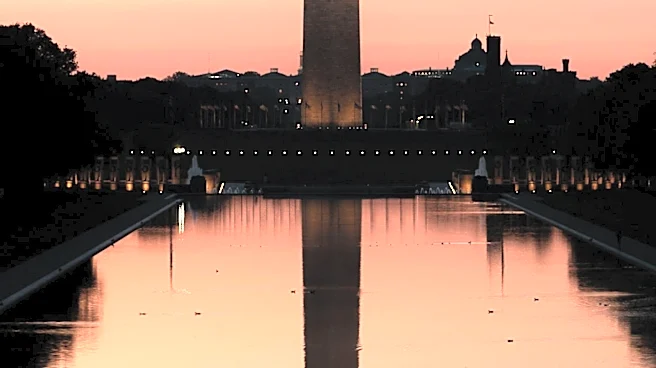
David Hearn, a former Olympic canoeist, has been charged with causing damage to the Reflecting Pool in Washington, D.C. The charges stem from an incident on June 19, when Hearn allegedly 'forcefully and violently' ripped up the sealant of the pool, which
had been recently renovated under a project ordered by President Trump. Hearn, who was arrested and detained for hours, denies the allegations, claiming he was merely inspecting the pool's lining. His lawyers argue that the charges are frivolous and have filed a motion to dismiss the case, citing photographic evidence that they claim proves Hearn did not cause significant damage. The Reflecting Pool, a site of national significance, has become a focal point of political controversy, with critics pointing to the renovation as a vanity project marred by incompetence and mismanagement.
Why It's Important?
The case against David Hearn highlights broader issues of governmental accountability and the politicization of public projects. The Reflecting Pool renovation, criticized for its no-bid contract and alleged mismanagement, has become emblematic of the controversies surrounding President Trump's administration. The charges against Hearn, a respected figure in the canoeing community, have sparked public outcry and raised questions about prosecutorial priorities. The case underscores tensions between federal authorities and citizens, with implications for how public spaces are managed and protected. The outcome could influence public trust in government projects and the legal system's handling of such disputes.
What's Next?
Hearn's legal battle is set to continue, with court appearances scheduled for August. His case, along with those of other individuals charged with minor offenses related to the Reflecting Pool, will be closely watched. The legal proceedings will likely explore the evidence presented by both sides, including photographic proof and witness testimonies. The case could set a precedent for how similar incidents are prosecuted in the future. Meanwhile, the Reflecting Pool remains drained and under repair, with ongoing scrutiny of the renovation process and its management.
Beyond the Headlines
The controversy surrounding the Reflecting Pool renovation and Hearn's charges reflects deeper cultural and political divides in the U.S. The incident has become a symbol of the broader debate over government transparency and accountability. It also raises ethical questions about the use of public funds and the prioritization of projects that serve political interests. The case may influence future discussions on the preservation of national landmarks and the role of citizen activism in holding authorities accountable.