
What's Happening?
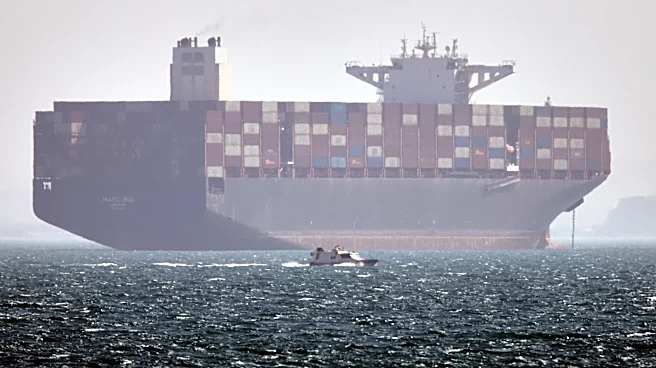
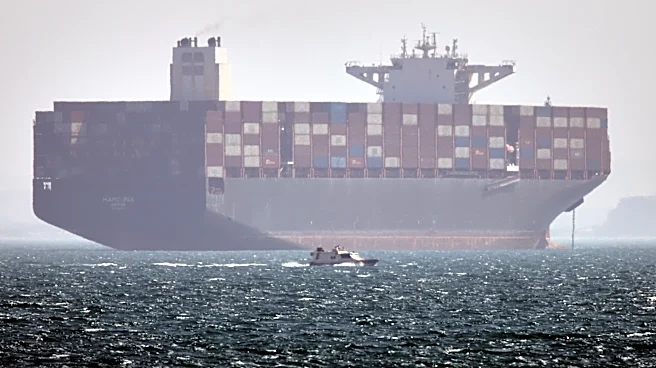
The U.S. military has attributed the responsibility for a security breach to the operator of the boxship CMA CGM San Antonio, which was struck by a cruise missile while transiting the Strait of Hormuz.
The incident resulted in injuries to eight crewmembers, marking the largest number of seafarer injuries in a single event since the conflict began earlier this year. The U.S. military claims the vessel did not adhere to Project Freedom's guidelines, which were designed to protect ships from Iranian attacks. However, CMA CGM, the world's third-largest ocean carrier, contends that it was fully coordinating with U.S. forces. The attack has raised concerns among shipping companies about the reliability of U.S. military protection in the region.
Why It's Important?
This incident underscores the ongoing tensions in the Strait of Hormuz, a critical maritime chokepoint for global oil shipments. The U.S. military's decision to blame the vessel operator rather than acknowledging potential gaps in its protective measures could erode trust among international shipping companies. This lack of confidence may lead to increased insurance costs and operational risks for vessels transiting the region. Furthermore, the suspension of Project Freedom by President Trump, following a request from Pakistani mediators, highlights the complex geopolitical dynamics at play, as negotiations with Tehran continue. The situation could impact global shipping routes and the stability of oil markets.
What's Next?
Following the suspension of Project Freedom, it remains to be seen how the U.S. will adjust its strategy to ensure the safety of maritime operations in the region. Shipping companies may seek alternative routes or enhanced security measures to mitigate risks. Additionally, the outcome of ongoing negotiations with Tehran could influence future military and diplomatic actions. Stakeholders, including international maritime organizations and regional governments, will likely monitor developments closely to assess the implications for global trade and security.