






What's Happening?
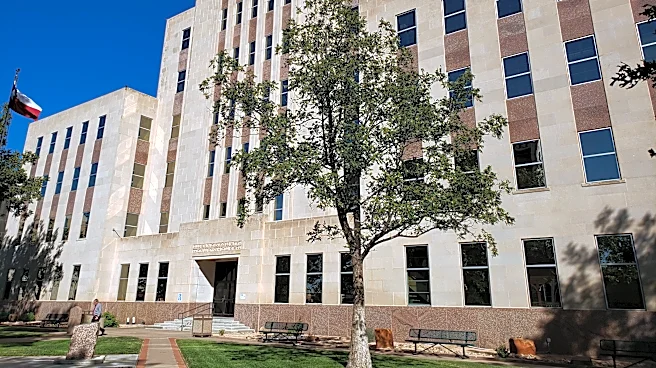
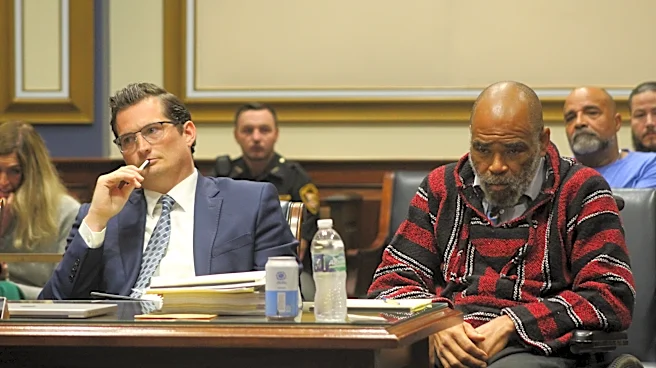
In Minot, North Dakota, a proposed plea deal for Dallas Rice, one of two individuals charged in an archery club theft case, has been rejected by the court. Following Dallas Rice's guilty plea on Monday to conspiracy to commit theft of property, Judge
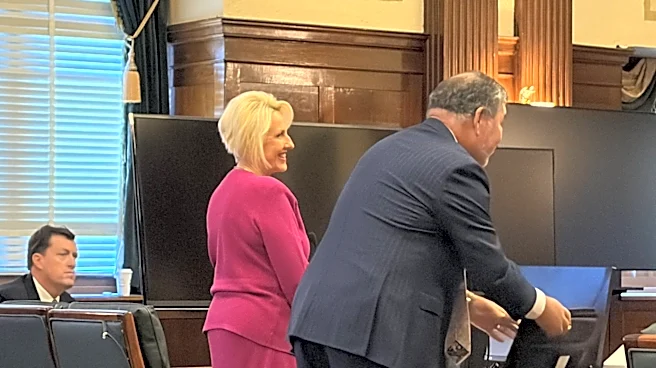
Gary Lee denied the agreement between the state and the defense. The specific terms of the proposed deal were not publicly disclosed. Consequently, Dallas Rice was ordered to be taken into custody. Investigators allege that Dallas Rice and his co-defendant and wife, Nichole Rice, stole over $180,000 from Souris Valley Bowmen during a three-year period. At the time of the alleged theft, Dallas Rice served as the group's president, and Nichole Rice was its treasurer. Nichole Rice previously pleaded guilty to her role in the case on September 16 and was sentenced to 60 days in jail, with the option to surrender herself before January 31.
Why It's Important?
This development is significant as it underscores the judiciary's role in scrutinizing plea agreements, particularly in cases involving substantial financial misconduct and positions of trust. The rejection of the plea deal for Dallas Rice indicates that the court found the proposed terms insufficient or inappropriate given the severity of the alleged crime and the amount of money stolen. This decision could influence future plea negotiations in similar cases, signaling a stricter judicial stance on financial fraud. For non-profit organizations and community groups like Souris Valley Bowmen, the case highlights the critical importance of robust financial oversight and accountability for individuals in leadership positions. The alleged theft of over $180,000 can have a devastating impact on such organizations, potentially jeopardizing their operations and community services. The outcome of this case will likely serve as a cautionary tale for other organizations regarding internal financial controls and the consequences of their absence.
What's Next?
With the rejection of the plea deal and Dallas Rice being taken into custody, the legal process will continue. A status conference in the case is scheduled to be set for next month. This conference will likely determine the next steps, which could include a new plea negotiation, a trial, or further legal proceedings. The court's decision to reject the initial plea deal suggests a potential for a more stringent sentence or a more thorough legal battle. The co-defendant, Nichole Rice, has already pleaded guilty and received a 60-day jail sentence, which she can begin serving by January 31. The differing outcomes for the two co-defendants, despite their alleged joint involvement, will be a key aspect to watch. The community and the Souris Valley Bowmen organization will be awaiting a final resolution to the case, which will hopefully bring closure and potentially restitution for the stolen funds.
Beyond the Headlines
Beyond the immediate legal implications, this case sheds light on the broader issue of trust and fiduciary responsibility within community organizations. When individuals in positions of power, such as a president and treasurer, are accused of such significant theft, it erodes public trust in volunteer-led groups. This incident could prompt other non-profit organizations to review and strengthen their internal financial controls, auditing procedures, and governance structures to prevent similar occurrences. The emotional and psychological impact on the members of Souris Valley Bowmen, who likely trusted the accused individuals, is also a significant, though less tangible, consequence. The case serves as a stark reminder that even in seemingly close-knit community settings, vigilance and robust oversight are essential to protect an organization's assets and maintain its integrity. The legal system's response, particularly the court's rejection of a plea deal, reinforces the principle that accountability for financial misconduct, especially when it involves a breach of trust, is paramount.