
What's Happening?
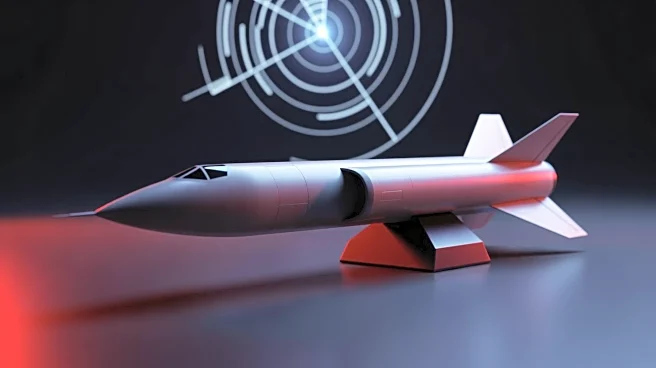
North Korea has announced the successful test-flights of hypersonic missiles, as observed by leader Kim Jong-un. The tests, reported by the Korean Central News Agency (KCNA), were conducted to enhance
the country's nuclear war deterrent capabilities. This development comes amid heightened tensions, as North Korea's neighbors detected multiple ballistic missile launches, accusing the North of provocations. The tests occurred just before South Korean President Lee Jae Myung's visit to China for a summit with President Xi Jinping. The hypersonic missile system is intended to improve the operational capabilities of North Korea's war deterrent, with Kim emphasizing the need for continuous upgrades to offensive weapon systems. The possession of such weapons could potentially penetrate the missile defense shields of the US and South Korea.
Why It's Important?
The successful testing of hypersonic missiles by North Korea represents a significant escalation in the region's military dynamics. Hypersonic weapons, capable of traveling at speeds exceeding Mach 5, pose a challenge to existing missile defense systems due to their speed and maneuverability. This development could alter the strategic balance in the region, prompting the US and South Korea to reassess their defense strategies. The tests also underscore North Korea's ongoing efforts to bolster its military capabilities, potentially complicating diplomatic efforts aimed at denuclearization. The timing of the tests, coinciding with South Korean diplomatic engagements with China, suggests a strategic move by North Korea to assert its military prowess and influence regional geopolitics.
What's Next?
The international community, particularly the US and South Korea, is likely to respond with increased diplomatic and military measures to counter North Korea's advancements. This could include strengthening missile defense systems and engaging in diplomatic efforts to address the security concerns raised by North Korea's actions. Additionally, the upcoming Workers’ Party congress in North Korea may provide further insights into Kim Jong-un's strategic intentions, including potential shifts in relations with the US and the resumption of denuclearization talks. The situation remains fluid, with potential implications for regional stability and international security.