





What's Happening?
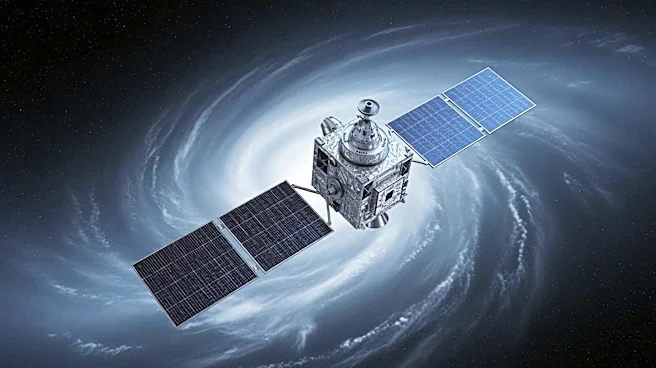
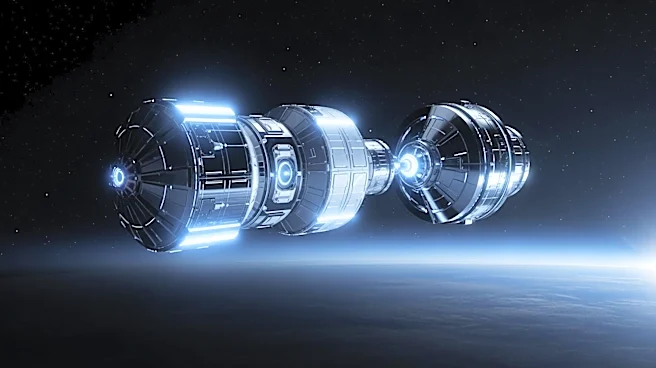
The LINK robotic servicing spacecraft, developed by Katalyst Space, has arrived at NASA's Wallops Flight Facility in Virginia. This spacecraft is designed to capture and boost NASA's Neil Gehrels Swift Observatory, which has been experiencing increased
atmospheric drag due to heightened solar activity. The LINK spacecraft will be integrated into a Pegasus XL rocket by Northrop Grumman engineers. The mission aims to elevate the Swift Observatory back to a higher orbit, allowing it to continue its scientific observations. This operation represents a pioneering effort in spacecraft servicing, potentially extending the operational life of satellites in low Earth orbit.
Why It's Important?
The successful deployment of the LINK spacecraft is crucial for maintaining the functionality of the Swift Observatory, which plays a vital role in astronomical research. By boosting the observatory's orbit, NASA can continue to gather valuable data on gamma-ray bursts and other cosmic phenomena. This mission also demonstrates the potential for in-orbit servicing to extend the lifespan of existing satellites, offering a cost-effective solution for maintaining and enhancing space infrastructure. The development of such capabilities could have significant implications for the future of space exploration and satellite management.
What's Next?
Following the integration of LINK into the Pegasus XL rocket, the spacecraft will be launched from above Kwajalein Atoll in the South Pacific Ocean. Once in orbit, LINK will rendezvous with the Swift Observatory to perform the boost operation. The success of this mission could pave the way for similar servicing missions in the future, potentially revolutionizing how space agencies manage and maintain their satellite fleets. Continued advancements in robotic servicing technology could lead to more sustainable and efficient space operations.