





What's Happening?
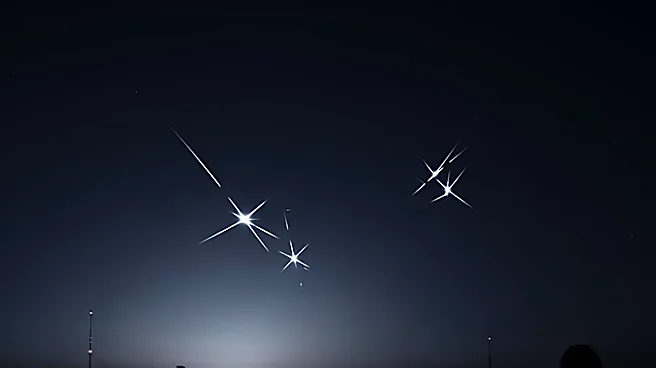
An independent analysis has confirmed the existence of mysterious sky flashes first observed in the 1950s. Ivo Busko, a retired NASA developer, conducted a fresh analysis of archival photographic plates from the Hamburg Observatory in Germany, which corroborated
earlier findings from the Palomar Observatory Sky Survey in California. These flashes, captured in long-exposure images, appear too sharp to be explained by normal stars or distant astronomical objects, suggesting they lasted less than a second. The findings, published on arXiv, support the hypothesis that these flashes could be from artificial objects, possibly orbiting Earth or passing nearby.
Why It's Important?
The confirmation of these mysterious sky flashes has significant implications for our understanding of astronomical phenomena and the potential presence of artificial objects in Earth's vicinity. If these flashes are indeed from artificial sources, it could suggest previously unknown activities or technologies from the mid-20th century. This discovery could prompt further investigation into historical astronomical data, potentially revealing more about the technological capabilities of the era. Additionally, the findings may influence current astronomical research, encouraging scientists to explore unconventional explanations for unexplained phenomena.
What's Next?
Further analysis of the Hamburg Observatory's archival plates is expected, which may uncover additional examples of these flashes and strengthen the statistical significance of the findings. Researchers may also explore other historical datasets to identify similar phenomena. The scientific community might engage in discussions about the implications of these findings, considering both natural and artificial explanations. If the flashes are linked to artificial objects, it could lead to a reevaluation of historical technological capabilities and prompt new research into the origins and purposes of these objects.
Beyond the Headlines
The possibility that these flashes are from artificial objects raises intriguing questions about the history of space exploration and technology. If deliberate, these objects could represent early attempts at space-based technology or surveillance. This discovery may also spark interest in the cultural and geopolitical context of the 1950s, a period marked by rapid technological advancements and the beginning of the space race. Understanding the origins of these flashes could provide insights into the technological ambitions and capabilities of the time, potentially reshaping historical narratives about space exploration.