



What's Happening?
The Fertilizer Institute (TFI) has expressed strong support for the conservation and nutrient stewardship provisions included in the draft Farm Bill proposed by the House Agriculture Committee. TFI President and CEO Corey Rosenbusch highlighted the importance
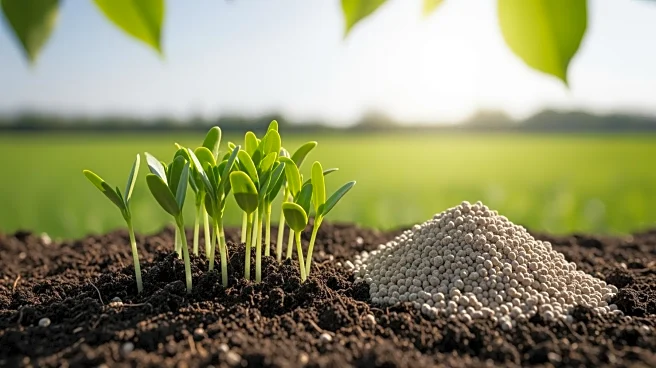
of these provisions in promoting sustainable agricultural practices. The draft bill includes a clear definition of plant biostimulants and ensures they are not regulated as pesticides. It also prioritizes innovative technologies such as precision agriculture, biological fertilizers, and enhanced efficiency fertilizers (EEFs) within conservation practice standards. These measures aim to reduce nutrient loss and improve production efficiency. Additionally, the bill proposes expanding access to certified technical expertise by allowing Certified Crop Advisors (CCAs) to be designated as technical service providers eligible for reimbursement under Section 590 nutrient management plans.
Why It's Important?
The inclusion of these provisions in the draft Farm Bill is significant for the agricultural sector as it supports both environmental stewardship and farmer profitability. By incentivizing the use of precision agriculture and enhanced efficiency technologies, the bill aims to help farmers maximize the benefits of applied fertilizers while minimizing environmental impact. This approach not only enhances the sustainability of farming practices but also contributes to the economic viability of farms. The expansion of technical assistance through Certified Crop Advisors is expected to improve the implementation of nutrient stewardship practices, leading to better conservation outcomes nationwide. These measures reflect a science-based approach to strengthening American agriculture, ensuring that farmers can continue to produce abundant and affordable food while protecting natural resources.
What's Next?
TFI plans to continue collaborating with key stakeholders, including Chairman Thompson, Ranking Member Craig, and other committee members, to advance the Farm Bill. The organization aims to ensure that the final legislation supports farmer profitability and environmental protections. As the bill progresses through the legislative process, stakeholders will likely engage in discussions to refine and enhance the proposed provisions. The focus will be on maintaining a balance between agricultural innovation and environmental sustainability, ensuring that the bill effectively addresses the needs of the farming community and the broader public.