



What's Happening?
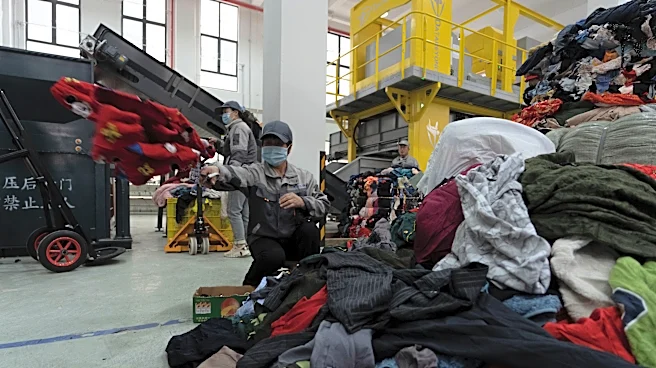
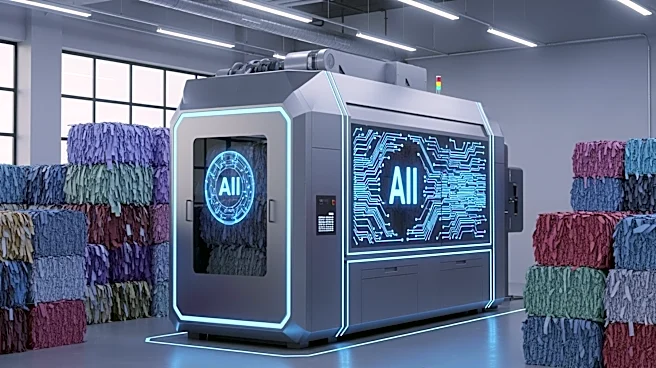
In Zhangjiagang, China, a new AI-powered machine, Fastsort-Textile, is transforming the textile recycling industry by sorting clothes faster and more accurately than humans. Developed by DataBeyond, this machine uses artificial intelligence to sort textiles
by composition, significantly reducing the time and labor required for recycling. The machine can process 100 kilograms of clothes in just two to three minutes, compared to the four hours it would take a human worker. This innovation is part of a broader effort to address the environmental impact of synthetic textile waste, which is a major global pollutant. The Fastsort-Textile machine is currently operational at Shanhesheng Environmental Technology Ltd., where it has already reduced the amount of unrecyclable textiles sent to landfills.
Why It's Important?
The introduction of AI in textile recycling is a significant step towards sustainable waste management. By improving the efficiency and accuracy of sorting processes, the Fastsort-Textile machine helps reduce the environmental footprint of the textile industry, which is a major contributor to global pollution. This technology not only saves time and labor costs but also increases the amount of textiles that can be recycled, thereby decreasing the reliance on landfills and incineration. As the fashion industry continues to grow, innovations like this are crucial for mitigating its environmental impact and promoting a circular economy.
What's Next?
The success of the Fastsort-Textile machine could lead to its adoption in other regions and industries, further advancing the global effort to reduce textile waste. As AI technology continues to develop, we may see more sophisticated machines capable of handling a wider range of materials and recycling processes. This could pave the way for 'dark factories' where robots operate 24/7, minimizing human intervention and maximizing efficiency. Additionally, the increased focus on sustainability may drive further innovations in recycling technologies, encouraging industries to adopt more environmentally friendly practices.