
What's Happening?
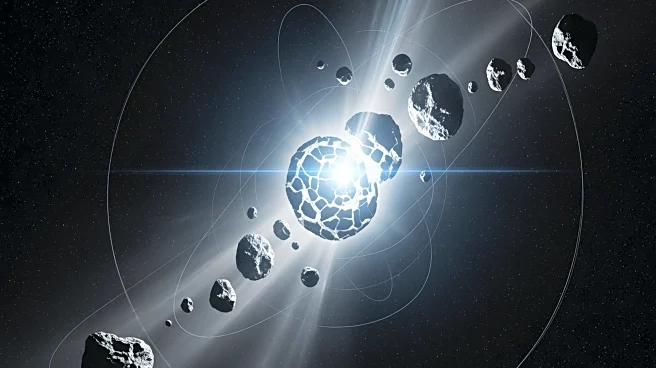
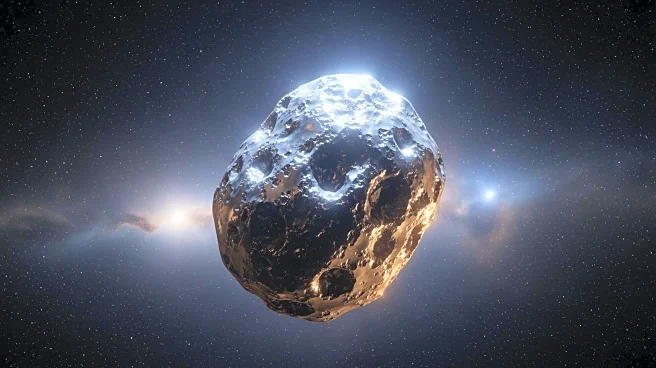
NASA's Hubble Space Telescope has unexpectedly captured the fragmentation of comet C/2025 K1 (ATLAS), breaking into at least four pieces. This rare observation occurred as the comet passed its closest approach to the Sun, experiencing intense heating
and stress. The event was not the original focus of the Hubble study, making the discovery particularly fortuitous. The images provide a detailed view of the comet's breakup, allowing scientists to study its composition and the processes involved in its disintegration.
Why It's Important?
The fragmentation of comet C/2025 K1 offers a unique glimpse into the materials that formed the solar system. By analyzing the fragments, researchers can explore the comet's composition and the effects of solar radiation and cosmic rays. This information is vital for understanding the evolution of comets and the early solar system. The discovery also highlights the importance of the Hubble Space Telescope in advancing our knowledge of planetary science and the dynamics of celestial bodies.
What's Next?
Scientists will continue to analyze the data from Hubble and ground-based telescopes to gain further insights into the comet's composition and the mechanisms behind its breakup. The study may lead to new theories about cometary behavior and the conditions that cause them to fragment. The findings could inform future space missions and enhance our understanding of other comets in the solar system. The research team is particularly interested in the comet's chemical composition, which appears to be unusual compared to other comets.