


What's Happening?
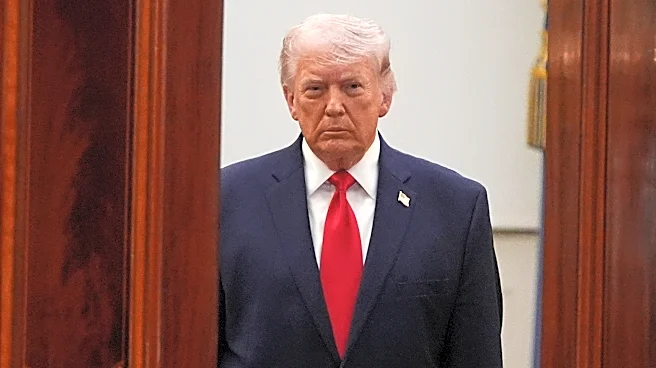
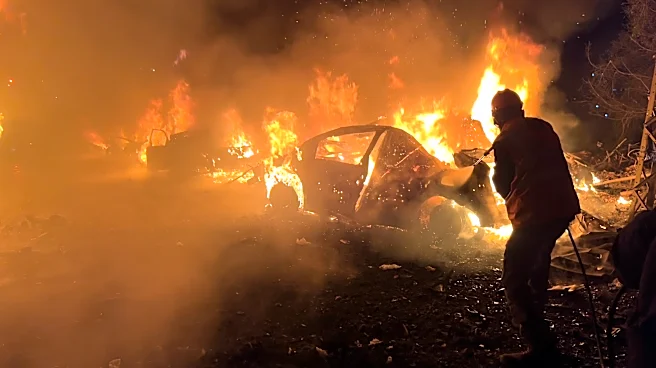
The United States is engaged in a military conflict with Iran, which began on February 28, 2026. Initially, President Trump suggested the conflict could be resolved quickly, but the timeline has extended beyond initial expectations. The U.S. strategy
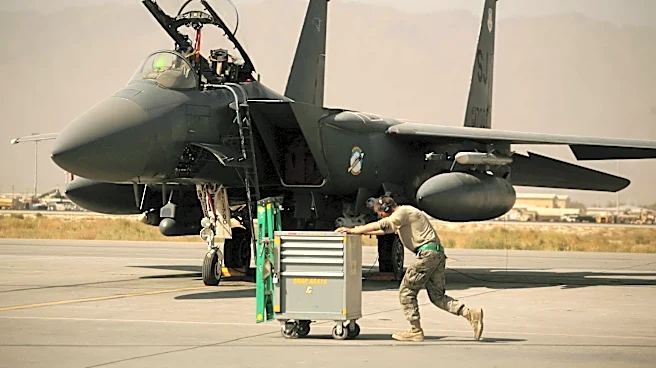
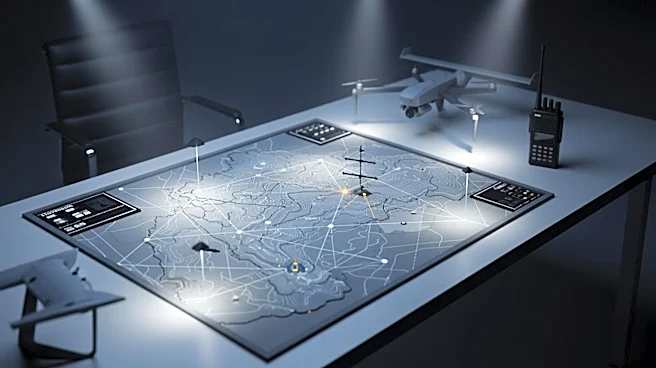
emphasizes speed and concentrated force, utilizing a mix of air and naval power, including bombers, fighters, and reconnaissance platforms. The campaign aims to degrade Iranian military capabilities, focusing on command centers, air defenses, and missile sites. Despite the absence of a large-scale ground invasion, the conflict requires significant logistical support, including refueling tankers and missile defense systems. The U.S. continues to deploy additional forces to the region, reflecting a model of concentrated capability rather than prolonged buildup.
Why It's Important?
The conflict with Iran highlights the U.S. military's approach to modern warfare, which prioritizes rapid, high-intensity operations over traditional ground invasions. This strategy aims to achieve quick results and limit political and geographical expansion. However, the reliance on a network of supporting systems makes the operation vulnerable to disruptions. The conflict also affects global trade, with Iran-backed forces threatening shipping routes, leading to increased gas prices in the U.S. The situation underscores the challenges of containing conflicts and the potential for escalation through allied and proxy actors.
What's Next?
The U.S. military strategy suggests a continued focus on air and naval operations to weaken Iranian capabilities. The conflict may persist for several more weeks, with potential for further escalation if regional dynamics shift. The U.S. aims to maintain pressure on Iran while managing the risks of broader regional involvement. The outcome will depend on adversary responses and operational challenges, which could extend the conflict beyond its intended scope.